Do you feel like your website traffic is surging, but you aren’t getting any meaningful interactions or sales from those visits? This is a common occurrence. I find that businesses often put a huge effort and budget into Search Engine Optimisation (SEO) and building website traffic, without the same effort for conversions.
You could have the best SEO strategy in the world, but if your website is poorly designed, lacks call to actions (CTAs), or you are attracting the wrong customers, your conversions and sales could fall short.
There are a range of ways to improve this and increase your chances of converting website visitors into paying customers. We can help with this if you want to book a free strategy session, however, we’ve also created a guide on how to convert website traffic into sales below.
1. Make Sure You are Targeting the Right Customers
Would a family with three young children consider a month-long trek to the Everest Base Camp? Probably not. Sure, this is a niche example, but the basic premise is incredibly important when looking at how to convert website traffic into sales.
Are the RIGHT people visiting your website? You might have thousands of daily visitors, but if 99% of those visitors are not your target audience, you won’t generate huge sales volumes.
This comes back to your marketing strategies, SEO, and PPC. Your website content and marketing should be using targeted keywords that are aimed at people who have a genuine need or interest in your business and/or products and services.
This starts with market research relating to your customer demographics and building “ideal customer” scenarios. Think about who will buy your products or need your services and then base your keyword strategies, SEO, and PPC on that.
2. Emphasise Your Unique Selling Point and Competitive Advantages
Think about this – your business and website is probably one of many that your potential customers may visit. Why should they pick your products and/or services over one of the other 5 companies they’ve considered?
This is where unique selling points (USPs) and selling your competitive advantage is vital to convert traffic into sales. What does your company do differently that sets it apart from your competitors? Perhaps you offer additional aftercare? Maybe your products come with an extended warranty? Maybe you offer free shipping and your competitors don’t?
Whatever your USP is, make sure it’s obvious and that you highlight it on your website. If visitors can clearly see these benefits, they are more likely to pick you over one of your competitors that is offering something more generic and forgettable.
This is of course assuming that you have USPs – if you don’t, I recommend looking at your products/services and figuring out how you can create some, otherwise you risk your business being overshadowed by your competitors.
3. Include Multiple Strong CTAs
To convert website traffic into sales, you need to have clear and consistent CTAs – all top companies do it and it’s a standard practice.
The simplest way to do this is to make sure your website pages have several strong CTAs. The CTAs should tell the visitor exactly what you want them to do – whether that’s signing up to an email newsletter, joining your mailing list, viewing a product offer, or adding an item to their shopping cart.
Make the CTAs obvious – they should be one of the main focal points of your web pages. They should be clear and stand out on the page, while still matching your branding.
4. Make Sure Your Website has Fantastic Usability
There is nothing more frustrating for potential customers than a poorly designed website with a confusing layout. Research shows that up 60% users will leave a site with poor experience1.
You’ve done the hard work by getting people to visit your site – don’t then fall short because your site has terrible usability or doesn’t look good. Microsoft Clarity is a great tool that you can use to track users’ movements so you can optimise accordingly.
Can visitors easily access all pages on your website? Is there a clear primary navigation? Is the text easy to ready and are the internal links obvious? These are all basic web design elements that can affect usability and visitor experience.
A simple way you can test usability and website user experience is by testing the website yourself – spend time going through the typical searching and buying process you would expect your customers to take and see what type of experience you get.
5. Work on Reducing Your Bounce Rate
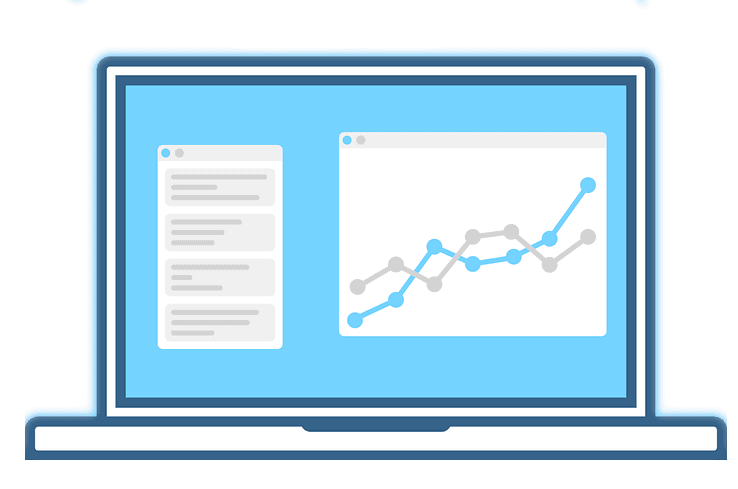
Bounce rate is an incredibly important metric when looking at the usefulness and efficiency of your website. It relates to the percentage of people who visit your website, but one of the following events happen:
- The visit only one page.
- Their sessions lasts 10 seconds or less.
- There is no conversion.
High bounce rates ultimately mean that something is wrong and are a contributing factor to poor sales. To reduce bounces rates, you can do the following:
- Improve page speeds.
- Make sure your site is mobile optimised.
- Improve CTAs.
- Highlight important content.
- Improve text readability and formatting.
- Have a sound internal link structure.
Some of these things overlap with other tips in this article, and I recommend looking at bounce rates as part of your overall strategy on how to convert website traffic into sales.
6. Remove Perceived Risks Relating to Your Business and/or Products
Perceived risk is something I find incredibly important for converting website traffic into sales, but it’s often overlooked. Ask yourself this – what is preventing your website visitors from converting into a paying customer? Common reasons include:
- Uncertainty about your business.
- Uncertainty about the quality of your products/services.
- Uncertainty about delivery reliability.
There are so many different reasons. It’s your job to think about what they could be and then provide effective resolutions for these perceived risks so that your website visitor’s concerns are eased.
For example, you can use social proof to remove concerns about product quality and value. You could also give delivery guarantees or show the different delivery options available.

7. Offer Additional Content That Customers Can Benefit From
Oftentimes, visitors viewing your website are “cold” – this means they are essentially a blank slate and have no prior trust or bond with your company.
To build that trust and convert them into “hot” customers who are more likely to make a purchase, you should consider adding value content that they will benefit from, and that shows you care:
- Webinars.
- How-to guides.
- eBooks.
- Downloadable content.
- Video reviews.
- Video demonstrations.
I get that these all take time and money to create, and they might not result in direct sales. However, content like this is extremely important for building trust, and establishing yourself as an authoritative brand.
8. Include Social Proof on Your Landing and Product Pages
Consumers more likely to buy a product or use a service if I can read social proof from previous customers who have had a positive experience with a business. This is just basic human nature and psychology – if we can see that other people have bought a product and loved it, our trust levels rise, and we will feel more comfortable making a purchase.
Use this to your advantage! Get social proof from your customers – reviews, photos, videos, comments, social media mentions. You should then PLASTER your website with this social proof! Make sure you it’s present on your landing pages, homepage, and product/service pages.
9. Work on Building an Email List
An email list is something you can act on. Think of it as a vital tool in your marketing arsenal. If you get a site visitor’s email, that gives you a link and an outlet where you can communicate with them after they leave – it provides you with more opportunities to turn them into paying customers.
Don’t just simply create one of those annoying email sign-up pop-ups. Instead, how you get their email should be linked to something valuable – something they need.
Perhaps it could be required to get a free product guide, or a free detailed how-to demonstration booklet? Maybe an email could be required to get an exclusive product or discount? Once you’ve done this, you can then put your email list to good use to forget connections with site visitors, introduce them to your business, and build trust.
Bump Your Conversions and Start Turning Site Visitors into Paying Customers
I hope you’ve found this guide on how to convert website traffic into sales. It is admittedly difficult, but if you utilise the 9 tips I’ve listed above, you should be able to get across the finishing line and make sure that more visitors are taking positive actions on your website.
If you want additional help, or feel you may struggle to implement these suggestions, please contact us – we have years of website design and marketing experience and want to help businesses succeed.
References
- https://lbbonline.com/news/storyblok-research-reveals-60-of-consumers-abandon-online-purchases-due-to-poor-ux