Seasonal demand is a valuable opportunity for your business to reach customers who are already thinking about buying. Christmas, Black Friday, Easter and back-to-school periods are obvious examples. Almost every industry has points in the year when interest and purchasing decisions are more urgent.
Greater demand brings greater competition, though. More businesses are trying to reach the same audiences. Costs can rise too. And, there’s far less time to recover if a campaign underperforms.
You need to plan your seasonal ads around a clear objective for them to be effective. The offer should be relevant and should be planned around customers’ existing behaviour observed. You need everything (the audience, creative, budget and tracking) to be ready before the opportunity arrives.
Seasonal Facebook ads need a different approach
When you organise evergreen campaigns, you can refine them gradually. If an ad underperforms, you usually have time to adjust the audience, test another message or replace it altogether. You don’t have that luxury with seasonal ads. They usually operate in a much tighter window. Interest builds quickly and can disappear almost overnight. You need to capitalise on that.
The concentrated demand is, of course, valuable. It does attract more advertisers though. With competition for the same placements and audiences high, costs will be higher too. Just when you need your ads to perform the most. The campaign has to be relevant right at the perfect time. A great Black Friday ad launched in December has no value, regardless of how well designed it is.
Seasonal advertising includes all sorts of events. Valentine’s Day, Easter, back-to-school shopping, summer holidays and other recurring annual events. Depending on your industry, you probably have your own seasonal peaks too- the start of the tax year, wedding season or periods shaped by travel, weather or industry deadlines.
Because the opportunity is brief, you can’t afford to spend most of it working out the best offer, audience or creative. This needs work before demand happens.
Facebook and Instagram are commercially important channels for advertisers. According to Statista, 54% of marketers surveyed worldwide in September 2025 identified Facebook as one of the social platforms delivering the highest return on investment. Instagram followed at 43%. However, access to a potentially profitable platform does not guarantee a profitable campaign. Timing, targeting, creative and measurement still determine the result.
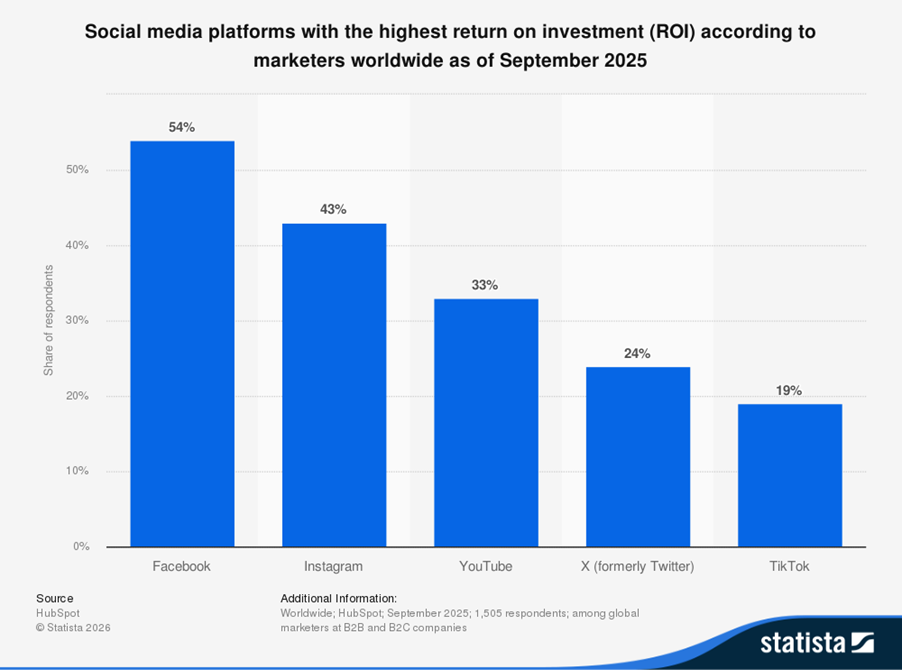
Image source: Socials with highest ROI for global marketers 2025| Statista
Start with the goal and the offer
Before you start, think about what you want to achieve from the campaign. Seasonal Facebook ads can generate sales, attract enquiries, secure bookings, collect leads, launch products or build awareness for a later promotion. Each of these outcomes needs a different setup and message.
If you pursue several objectives at ones, you might find it difficult to assess performance. If you want to reach as many people as possible, you might end up with loads of attention but not many sales. Equally, optimising an ad for purchases might not be the best way to introduce an unfamiliar product. Having one primary objective will give your campaign a clearer purpose and will provide a more meaningful result you can measure.
Your proposed offer should be considered in commercial terms. A large discount will likely attract clicks, but will it give you much profit once your advertising, delivery and fulfilment costs are included?
Other things to check before committing: available stock, staffing capacity, booking availability and the final order date before delivery or before the service is provided.
The right incentive will depend on your business and customers. IT could be a percentage discount, a product bundle, free delivery, an early-booking benefit or additional value rather than a reduced price. Whatever the offer, it needs to be easy to understand and financially sustainable. Any deadline or scarcity claim must also be genuine.
A digital marketing strategy built around clear goals will make sure your promotion attracts valuable customers rather than giving short-lived attention. If you need help getting things right before launch, consider booking a strategy session with Key Principles.
Work backwards from the seasonal peak
To have the best chances of success, start well in advance. Identify the point when you think demand will be the highest. Work backwards to decide what you need to do at each stage. Your ‘end point’ might be Black Friday, the beginning of school term, an event date or the final practical day for customers to order.
It might be useful to plan a timeline:
| Phase | Focus |
| Preparation | Confirm the objective, offer, budget, audience and tracking. |
| Awareness | Introduce the need, product or upcoming promotion to relevant audiences. |
| Launch | Reveal the full offer and begin collecting meaningful performance data. |
| Peak | Concentrate activity around the period when purchase intent is strongest. |
| Last chance | Use genuine urgency before the offer or practical fulfilment window closes. |
Having a phased calendar also makes it easier to adapt the message. The awareness ad can introduce the offer or problem. Launch and last-chance creative can put a bigger emphasis on the offer and deadline.
Many businesses find that launching between seven and 14 days before the expected peak is a good starting point. The campaign can begin gathering performance data before demand is at its strongest, which is useful. The right lead time for you will depend very much on your sales cycle, budget, audience size and the length of the specific seasonal opportunity.
Don’t forget to build production time into your calendar too. Copy, design, video, internal approvals, landing-page updates and tracking tests should be completed before launch. Factor those in. Include delivery cut-offs and booking capacity so ads don’t continue promising something you can no longer fulfil.
Build audiences around customer intent
Each person that sees a seasonal advert will have a different relationship with your business. A previous customer may know the product and only need a reason to return. Someone finding out about your brand for the first time may need context, reassurance and proof before acting.
This should shape your audience selection and message. Warm audiences can include previous customers, website visitors, social engagers, video viewers can cart abandoners. They may already trust the business and its products. A promotion that you show to these groups can acknowledge existing interest and focus on the specific offer, deadline or reason to return.
With prospecting audiences, you’re reaching people for whom the product or service might be relevant but they’ve not yet interacted with the business. Adverts for this cohort need to explain the product, demonstrate value, provide social proof and make your brand recognisable. An immediate purchase might suit a simple product (like a quirky pair of running socks) but a service or higher-value item will require awareness and consideration.
Be mindful that having more audience segments doesn’t mean you’ll get better results. Splitting a modest audience into numerous small ad sets can limit the data available to each. It might also cause campaigns to compete for the same users. Having a broader structure with a clear purpose can often make it easier to see what is genuinely driving results.
Consider exclusions too. People who have already bought the promoted product may no longer need to see its sales advert. Existing customers might need a different loyalty or a cross-sell offer. Removing irrelevant users can help your budget focus on who can still take action.
Create seasonal ads that still look like your brand
While you want your seasonal ads to feel timely, they still need to be immediately recognisable as belonging to your brand. If your usual colours, tone and visual style disappear with seasonal clichés, it can weaken your brand. Any seasonal elements should support your message and not take over.
Ads also need to be designed for how people see them. A landscape website image might not fit well on a vertical mobile. Prepare suitable versions for Facebook and Instagram feeds, Stories and Reels rather than making one asset fit them all. Keep important text clear. Use strong contrast. Make the offer or main benefit really understandable quickly. If you’re doing short-form video, the opening seconds need to establish what you’re promoting. Captions need to make sure the message still makes sense with no sound.
Social proof can give hesitant customers another reason to pay attention. Statista Consumer Insights data published in 2022 showed that half of UK respondents found online product ratings helpful. Reviews, testimonials, ratings and customer photos or videos can be more persuasive than another claim from the rand. Specific comments about quality, service or results feel more credible than vague praise. Use genuine examples that relate to the promoted product and avoid crowding the creative.
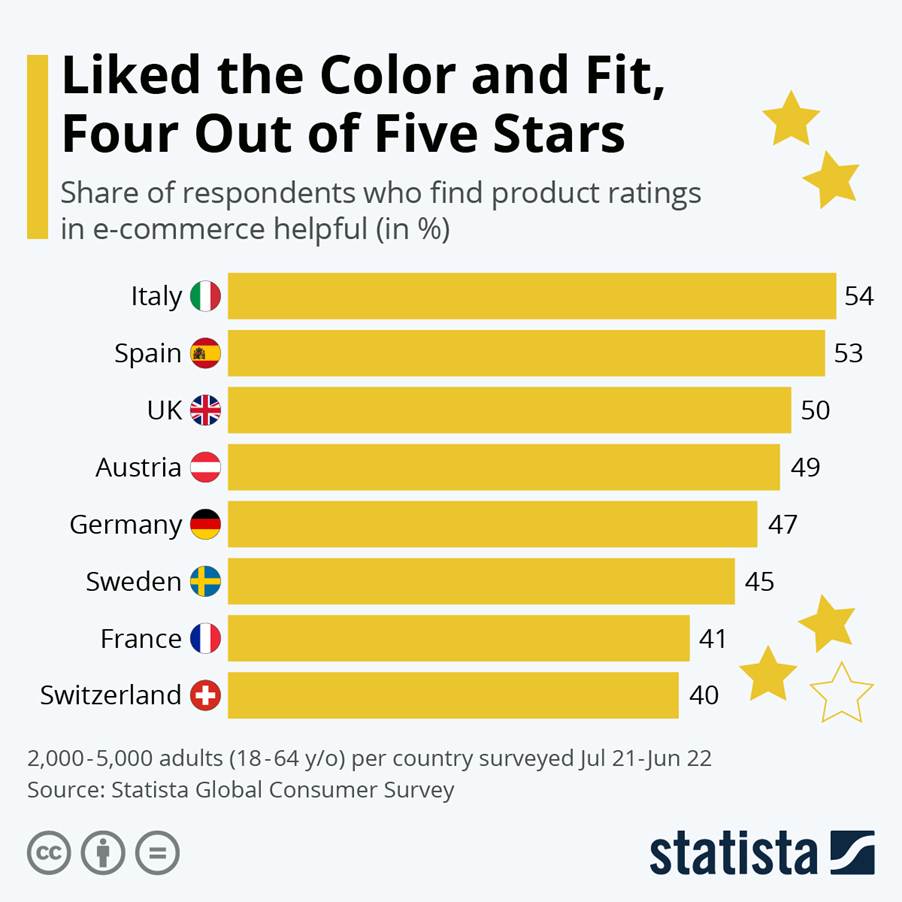
Image source: Chart: Liked the Color and Fit, Four Out of Five Stars | Statista
Don’t rely on producing one advert. Prepare some meaningful variations before launch. Perhaps change an image, format, benefit or customer proof while keeping the core offer. This will give you an alternative if one underperforms and helps stop the audience from seeing the same thing repeatedly.
One last point: the advert and destination must feel like parts of the same campaign. The landing page should repeat the offer, imagery, benefit, deadline and call to action. If a customer clicks a seasonal advert and has to search for the promotion, the momentum gained by the creative is lost very quickly.
Set up the campaign to measure meaningful results
You need measurable results from the off. Even before the first ad is published. Your campaign objective and conversion event should be established at the planning stage. If you’re a retailer, you might optimise for completed purchases. A service business might measure submitted enquiry forms or confirmed bookings. If you choose a metric that doesn’t represent a valuable customer action, you could lead your campaign in the wrong direction.
Tracking accurately is essential. The Meta Pixel is a piece of code added to your website that records actions (product views, completed purchases, submitted enquiry forms). IT can help you understand which Facebook ads are giving you the most meaningful results. The Conversions API can give you another route for sending this information to Meta directly from the website’s system. You can also add UTM parameters to advert links so your campaign traffic is identifiable in analytics platforms.
Before launch, test the entire journey from advert click and landing page to checkout, form submission or booking confirmation. Check that each action is recorded once and appears in the expected reporting system.
Seasonal competition can make impressions and results more expensive. Budgets should be realistic. Base them on likely conversion costs, margins and available demands rather than a universal ratio. Divide spending across all phases (awareness, launch, peak and last-chance) while retaining enough flexibility to support the strongest performances.
Measure what the campaign contributes to the business. Cost per acquisition, conversion rate, revenue, ROAS and profit reveal more than clicks do alone. CTR and CPC are still useful but more so for spotting weak creative or expensive traffic. A well-clicked ad can still lose money if visitors don’t convert or if margins are too low.
While the campaign is live, continue checking tracking, delivery, landing pages, stock and booking capacity. Adjust your budgets and creative in response to any meaningful patterns. If you want support with this, Key Principles’ PPC services can help.
Make the most of your next seasonal opportunity
You don’t get successful seasonal ads just by increasing your budget when demand rises. You need a clear commercial goal, relevant offer, suitable audiences and accurate conversion tracking.
The best campaigns are planned out before the rush starts. They’re supported by creative that keeps your brand while feeling timely. This way you have a better chance of turning a brief increase in attention into profitable sales, enquiries or bookings.
If you would like help planning, launching or improving a seasonal paid social campaign, contact Key Principles to discuss the opportunity.