Social media has changed almost beyond recognition since its inception. What were once simple online message boards are now whole multi-purpose systems. Yes, there’s still the communication element but they have culture, commerce, education and entertainment ingrained.
It’s been over 20 years since the launch of Facebook (2004), YouTube (2005) and Twitter (2006). While you can still see the original elements that remain, it’s clear that there has been an evolution.
Features come and go. Algorithms refine. Marketing advice that worked a year ago can suddenly not work anymore. Few features show this better than hashtags.
Not too long ago, it was widely considered good practice to add dozens of hashtags to an Instagram post. Brands would research trending tags and then copy and paste the same lists beneath all their posts. They wanted to maximise their reach. And for a while, it worked. Now, though, doing the same is far less effective.
Does that mean hashtags are dead? Not quite.
Hashtags are still a part of successful social medial strategies. Their role, though, has changed significantly. They’re no longer the primary driver of visibility. Instead, their use is to provide context and reinforce topics. They help platforms understand what your content is about. At the same time, captions, keywords, visuals and audience engagement have become much more influential.
Knowing when and how to use hashtags can help your content reach the right people without you relying on outdated (and ineffective) tactics. Here’s what businesses need to know about them in 2006. If you’d like to chat to us more about your hashtag use, book a strategy session.
The rise and fall of the hashtag
The hashtag has come a long way since it first appeared on social media. It was first used by an American blogger called Chris Messina in 2007 in a tweet. The concept then became entrenched in the platform’s culture. Soon after, their use appeared on other platforms like YouTube, Facebook and Instagram.
The word hashtag was added to the Oxford English Dictionary in mid-2014 with the definition:
“a word or phrase with the symbol ‘#’ in front of it, used on social media sites and apps so that you can search for content with the same subject”
Instagram was part of the huge boom. Brands would add 20 to 30 hashtags on each post in the hope of reaching larger audiences. Marketing strategies revolved around finding the latest hashtags and combining them to maximise your reach.
It worked. For a while at least.
The algorithms back then were relatively simple. Hashtag use meant it was easier to categorise content. The more information that was given in the form of hashtags, the easier it was for the system to understand what your content was about.
Now we have better algorithms and AI capabilities that analyse captions, images, videos, audio, user behaviour and engagement patterns. Platforms don’t need to use hashtags at all.
That said, they haven’t become obsolete. They’re now just one piece in a 500-piece jigsaw rather than the main event.

Image source: Hashtag Photos, Download The BEST Free Hashtag Stock Photos & HD Images
So, do hashtags still matter?
The short answer is yes.
The longer answer is that they matter differently now.
Modern social platforms use hundreds of ranking signals when they decide which content to recommend. Hashtags are one of those. Even though they don’t have the same weight they used to. They’re more like ‘supporting information’ these days. What this means is that a hashtag (make it relevant) will reinforce the existing topic of your content. It can improve categorisation and can help users discover your posts but it won’t compensate for poor-quality content and unclear messaging.
If you’re using generic hashtags or large numbers of them, we guarantee you won’t be seeing much benefit. All of the other signals in your content are already well understandable by systems.
Hashtags now are about confirming the subject matter. Your campaign success depends on having valuable content that answers users’ questions, encourages interaction and provides your genuine expertise.
To simplify, hashtags support discoverability rather than create it.
Platform-by-platform guide
Unfortunately, you won’t find a universal hashtag strategy for each platform. As you probably already know, different social media platforms appeal to different groups, which means the strategies you use for them are different (and this includes your hashtag use). Here’s a quick summary of the recommended approaches for each platform.
| Platform | Do hashtags still matter? | Recommended approach |
| Yes | Use three to five highly relevant hashtags alongside strong captions. | |
| TikTok | Yes | Focus on relevant niche hashtags rather than chasing every trend. |
| Yes | Use two or three professional, industry-specific hashtags. | |
| X | Sometimes | Use one or two hashtags to join conversations or live events. |
| YouTube | Limited | Prioritise titles, descriptions and keywords over hashtags. |
This is one of the platforms where hashtags do still have genuine value. Remember, though, that using more won’t usually get you better results.
Instagram now understands images, videos, captions and user behaviour really well. If you then add lots of loosely related hashtags, you’re not going to improve performance.
Quality not quantity, right? The same goes for Instagram hashtags. A handful of highly relevant ones will reinforce your message and keep your captions clean and professional.
Example: A digital marketing agency posts about paid advertising. They could use hashtags related specifically to PPC, Google Ads or digital marketing instead of broad, overused ones like #business or #success.
Instagram users are using search with keywords more than hashtags these days too, which means your captions are just as important as the right tags.

Image source: Hashtag Photos, Download The BEST Free Hashtag Stock Photos & HD Images
TikTok
The algorithm on TikTok relies on understanding what viewers enjoy watching. It analyses how long you spend watching different types of content and then feeds you more of the same.
Hashtags still provide useful context but they are now an extra to the spoken audio, on-screen text, captions, watch time and engagement signals.
Many businesses add popular hashtags because they’re trending. But if these have little connection to your actual content, they could do more harm than good. That’s because they could confuse the algorithm about the intended audience.
Like with Instagram, your hashtags should genuinely reflect the topic of your video. You can combine one broader category with several niche hashtags to give enough context in a way that won’t feel forced.
Compared to entertainment-focused platforms like TikTok and Instagram, hashtags are different on LinkedIn. Here, they’re professional topic indicators and not viral growth tools.
Using a couple of carefully selected industry hashtags can put your posts into the right category and keep your appearance polished.
Professional audiences tend to value readability. Weaving hashtags in natural works best and makes things look more authentic compared to putting a long block of hashtags at the end of a post.
X
X (formerly Twitter—will we ever stop saying that?) is where the hashtag started but it’s not as relevant these days. At least not compared to Instagram and TikTok. They can still be useful for joining conversations but not really for improving long-term discoverability.
According to data, hashtags generate 85% of all platform conversations on the platform. Events, conferences, sporting occasions and breaking news still develop around shared hashtags. This makes it easier for users to follow live discussions. Outside of these situations, excessive hashtag use tends to reduce readability. It also makes posts feel promotional too.
Here, one or two relevant hashtags is enough.
YouTube
Compared with other platforms we’ve mentioned, YouTube is right down the list in terms of how much a role hashtags play.
Titles, thumbnails, descriptions and audience engagement have a far greater impact on how videos are ranked and recommended. You can add a few relevant hashtags to reinforce the subject but they should never replace keyword research or good optimisation.
If your business is investing in video marketing, you’ll achieve better results by focusing on your titles and descriptions. Don’t waste too much time researching hashtags.
Hashtags vs Keywords
It’s a common misconception (arguably one of the biggest) that hashtags and keywords do the same thing. They don’t.
Keywords are all about how people naturally search for information. If someone wants advice on Google Ads, they are far more likely to type “how to improve Google Ads performance” rather than entering a hashtag.
Social platforms have started to follow suit with users now searching for complete phrases and questions using natural language. They don’t spend time browsing hashtag feeds these days.
This is why your written caption matters so much. Having relevant keywords placed naturally throughout the caption means that the platform can understand exactly what your content covers. It also makes it easier for users to find your post through the search function as you’re typing exactly what they’re typing.
Hashtags then reinforce all of that. Keywords explain your content, hashtags confirm it. The strongest strategies use both cleverly together rather than relying on one or the other.
Common hashtag mistakes
Many businesses still follow advice that belonged to social media a decade ago:
- Using too many hashtags.
Adding 20 or 30 won’t improve your visibility. Your posts will seem cluttered. It can dilute your message.
- Copying the same hashtags every time you post.
Identical hashtag lists suggest that they were chosen out of habit rather than relevance. Each post needs to have its hashtags genuinely match its subject.
- Chasing trends.
Trending hashtags can expose your content to larger audiences. But only if they’re genuinely relevant.
Using unrelated trending topics to increase impressions will lead to poor engagement. The audience wasn’t looking for your content in the first place.
- Ignoring the differences between different platforms.
You can’t use the same strategy everywhere. A hashtag approach from Instagram would look unprofessional on LinkedIn or unnecessary on YouTube. Tailor your hashtags to each platform. You shouldn’t have identical posts across every channel.
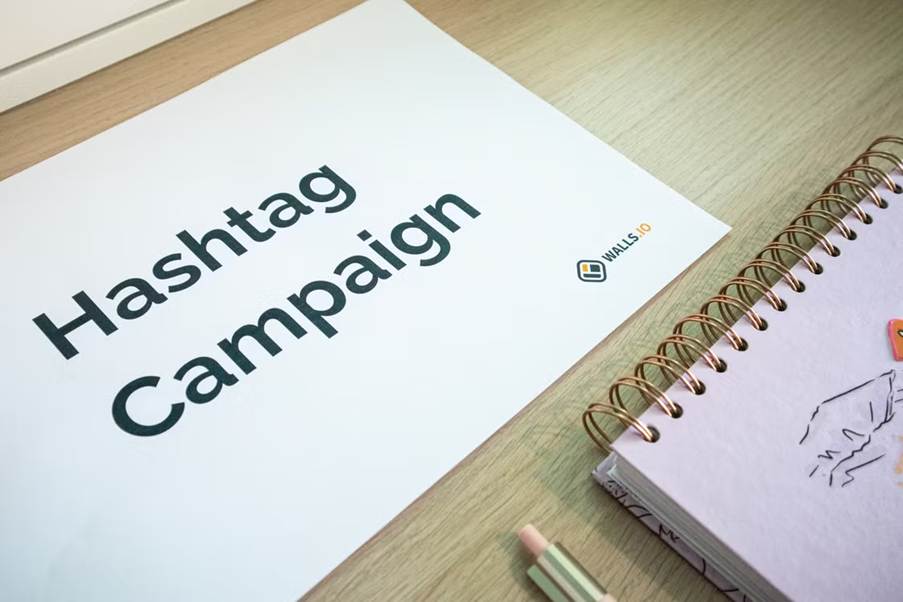
Image source: Hashtag Photos, Download The BEST Free Hashtag Stock Photos & HD Images
How to build a hashtag strategy in 2026
Keep it simple. The most successful hashtag strategies are just that. Start by understanding the audience (specific to the platform). You’re not chasing popularity. Think about the topics your customers care about and the language they use when discussing them online. Choose hashtags that support those conversations. Don’t try to reach everyone.
Next, keep it focused. A small number of highly relevant hashtags will provide more value than a lengthy collection of generic terms.
Review. And do it regularly. Nothing stays the same in “algorithmland” so check your performance often. Look beyond impressions. Consider whether your hashtags are generating meaningful engagement, profile visits or enquiries. If they’re not, adjust it and test again.
Finally, remember that a good hashtag strategy is only as strong as a good marketing strategy. It can’t replace useful information. It won’t help unengaging visuals become engaging.
Final thoughts
There are loads of people out there claiming that hashtags are dead. In truth, it’s far more nuanced than that.
They do still serve a useful purpose and you can tap in on that whatever platforms you’re using. They’re just not the shortcut to visibility that they used to be.
Today’s algorithms can understand your content from a wide range of signals. Your captions, keywords, imagery, video and user engagement are much higher up the list for understanding than a hashtag is now.
Think of hashtags as a tent peg rather than the tent pole. They reinforce it. Used carelessly, they add little value. Using them like you did a decade ago also makes you look old-fashioned and dated.
The most successful social media strategies in 2006 combine:
- High-quality content.
- Platform-specific optimisation.
- Relevant keywords.
- A few carefully selected hashtags that reflect the topic.
If you’re looked to improve your social media strategy or integrate it with SEO and paid advertising, the team at Key Principles can help. Whether you need a tailored strategy or, expert PPC management or advice on growing your online visibility, contact us to see how we can help.