Google Ads has been moving towards automation for years. Smart bidding, responsive search ads and Performance Max campaigns have all gradually put more control towards machine learning and away from advertisers.
Image source: New ad formats built with Gemini coming to Google Search
The announcements made at Google Marketing Live 2026 feel different.
It seems it’s not simply about automating campaign management anymore. Google is now redesigning how advertising works inside Search itself.
The latest updates introduce Gemini-powered conversational ad formats across AI Mode and Search. Ads are becoming more contextual, interactive and integrated directly into AI-generated responses. Static text ads don’t sit beside search results now. Instead, Google is experimenting with adverts that participate in conversations actively.
This is a big change.
The implications are significant for advertisers. Campaigns may become more personalised and more effective, but they could also be less visible and less predictable. Creative strategy, data quality and audience understanding are likely to matter more than before.
The updates also reflect other changes and trends:
- Search behaviour itself is changing.
- People are searching in longer, more natural ways.
- They increasingly expect AI-generated recommendations, summaries and guidance. A simple lists of links isn’t enough now.
Google clearly sees conversational AI as the future of Search. Advertising is being rebuilt around that assumption. Its own research shows that 75% of people make faster, more confident decisions using AI Mode in Search.
Here’s what the new updates actually mean, how the latest ad formats work and what advertisers should be preparing for next.
The bigger goal: ads inside conversational search
The most important takeaway from Google Marketing Live 2026 is not a specific feature or campaign type. It is the fact that Google is steadily turning Search into a conversational experience.
AI Mode allows users to ask more detailed, natural-language questions. They receive AI-generated responses, recommendations and follow-up suggestions. They’re not given a standard search engine results page like before. Google now wants users to interact with Search more like a conversation. This brings a problem for advertising in its traditional sense. It’s now being integrated directly into those conversations.
Google describes the new formats as “helpful”, “contextual” and “guided.” Gemini models generate tailored creative based on a person’s specific search intent.
Traditionally, paid search has relied heavily on:
- Keywords.
- Static ad copy.
- Landing pages.
- Click-through rates.
The newer AI-powered formats shift towards:
- Conversational intent.
- Dynamic creative generation.
- AI explainers.
- Interactive user journeys.
In practice, that means adverts may increasingly feel more like recommendations embedded inside AI-generated content.
Google has stressed that all formats remain clearly labelled as sponsored content. However, the distinction between organic recommendations and advertising is becoming far more blended than in traditional search experiences.
Conversational Discovery ads explained
One of the headline announcements was the launch of Conversational Discovery ads. These ads answer highly specific user questions directly within AI Mode.
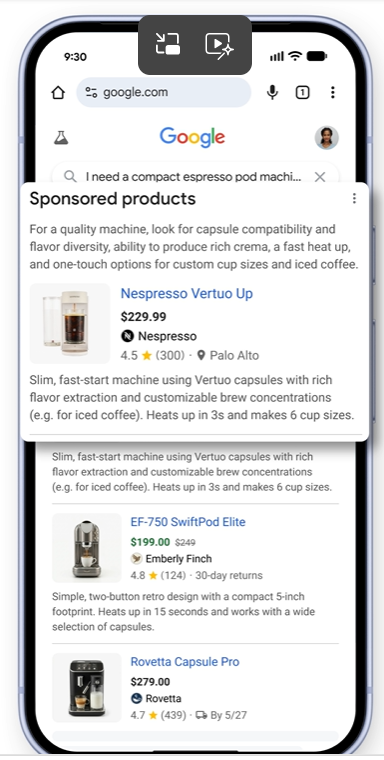
Image source: New ad formats built with Gemini coming to Google Search
For example, someone searching, “I want my house to smell like a luxury spa or forest retreat. What are some low-maintenance ways to do that?” might receive a Gemini-generated advert tailored specifically to that conversation.
They won’t be shown a generic scented candle advert. Gemini will dynamically create messaging based on the user’s intent, preferences and context.
Google says the model analyses the meaning behind the query. It uses this to generate relevant creative in real time. This is a major evolution from traditional search advertising.
Previously, advertisers would create multiple versions of static ad copy. Google would test combinations through responsive search ads. Now, Gemini itself becomes part of the process. The system is effectively generating contextual advertising responses dynamically within a conversation.
Google is also introducing an “independent AI explainer” alongside these ads. Gemini evaluates product or service information independently. It then presents a summarised explanation next to the advertiser’s messaging.
The aim is to create more trust and transparency while helping users make faster decisions. Trust matters. Google knows users may become sceptical if AI-generated advertising starts blending too closely with recommendation systems. AI explainers appears are designed to reassure users that products are being evaluated rather than blindly promoted.
Advertisers, however, have new questions:
- How much control will brands have over AI-generated messaging?
- How will explainers influence click-through rates?
- Will brands be comfortable with AI summarising their products independently?
- How will attribution work inside conversational journeys?
These are still early-stage tests, but they give us an idea where Search is heading.
Highlighted Answers and AI-generated recommendations
Google is also testing Highlighted Answers within AI-generated recommendation lists. This format allows highly relevant adverts to appear directly inside AI-generated recommendations during research-heavy searches.
For example, if someone asks AI Mode for, “The best language-learning apps for travelling around Europe,” Google may insert sponsored recommendations directly within the generated response.
Again, this changes the role advertising plays within Search.
Traditionally, adverts have occupied separate placements above or below organic listings. Highlighted Answers place advertising directly inside the recommendation environment itself. It means two things: opportunities and risks.
On one hand, advertisers may gain visibility within highly engaged, high-intent research journeys. Great.
On the other, advertisers may need to compete much harder on relevance and trustworthiness because users are evaluating recommendations more critically. Not so great.
Google appears to be prioritising:
- High-quality creative.
- Relevance.
- Contextual fit.
- Strong intent matching.
It’s not about rewarding advertisers with the highest bids. We could see this as potentially improving user experience. But it may also make campaign performance more difficult to predict.
AI-powered Shopping ads and high-consideration purchases
Google is also expanding AI-powered Shopping ads for larger, more complex purchases. These formats are for products where consumers typically conduct more research before buying. They include things like:
- TVs.
- Fridges.
- Espresso machines.
- Appliances.
- Electronics.
The result doesn’t simply displaying product listings now. Gemini generates custom explainers describing why a product may suit the shopper’s specific needs. This is particularly important now modern search behaviour has become far more research-driven.
Image source: New ad formats built with Gemini coming to Google Search
Consumers want:
- Product comparisons.
- Personalised recommendations.
- Feature explanations.
- Decision-making guidance.
Not so long ago, we’d go into a physical retail shop and speak to staff to get this information. AI-powered Shopping ads attempt to give us the same experience directly.
This could become especially valuable if you’re advertising products with:
- Longer buying cycles.
- Complex features.
- Higher prices.
- Significant differentiation points.
However, it also means it’s important to have accurate product feeds, structured data and detailed product information. Gemini can only work well and generate useful explainers if the underlying product information is strong. Data quality is more important now.
Image source: Introducing Google Ask Advisor for marketers
Business Agent for Leads and the end of static forms?
One of the more interesting announcements was Business Agent for Leads. This introduces a Gemini-powered conversational assistant directly inside lead generation adverts.
Instead of users completing a standard lead form, they can interact with an AI-powered brand representative trained on the advertiser’s website content. Google’s example involved university applicants asking questions directly inside an advert before submitting an enquiry.
This could significantly change lead generation strategy across many industries.
Static forms often create friction. Many users hesitate to submit details before getting basic questions answered. A conversational interface could potentially improve:
- Lead quality.
- Conversion rates.
- User confidence.
- Engagement time.
It may also create a more personalised customer experience earlier in the buying journey.
As with anything, there are potential cons. This introduces additional challenges. Things like brand control, AI accuracy, compliance and messaging consistency can throw a spanner in the works. Businesses will need to make sure their website content and data are reliable enough to support AI-driven interactions. Anything that’s poor or outdated on a website could directly affect the quality of AI-generated conversations.
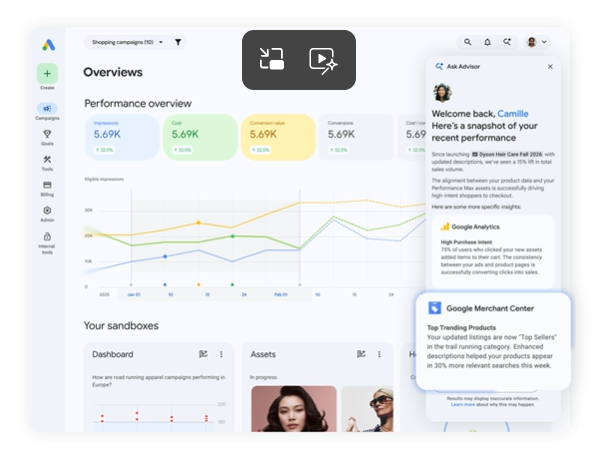
Image source: Introducing Google Ask Advisor for marketers
Traditional Google Ads vs AI-powered Search ads
Here’s a direct comparison:
| Traditional Search Ads | AI-Powered Search Ads |
| Keyword-triggered | Intent-and-conversation driven |
| Static ad copy | Dynamically generated creative |
| Separate ad placements | Ads integrated into AI responses |
| Manual lead forms | Conversational AI interactions |
| Click-focused journeys | Interaction-focused journeys |
| Advertiser-written messaging | Gemini-assisted messaging |
| Standard product listings | AI-generated explainers |
| Search term targeting | Contextual intent modelling |
The table shows just how significant these changes may become over time. This is not just another ad extension or automation feature. It is an actual structural change in how Search advertising operates.
Why this changes PPC strategy fundamentally
The rise of conversational advertising changes several core principles of PPC management.
Creative becomes more important
Targeting and delivery become more automated and so creative quality becomes a major differentiator.
Businesses will need:
- Strong messaging.
- Clear positioning.
- High-quality assets.
- Well-structured product information.
- Reliable website content.
AI systems still rely on strong source material. Weak creative combined with automation generally produces weak results faster.
First-party data matters more
Google’s systems are rely on signals and predictive modelling. Advertisers with good conversion tracking, CRM integration and customer data are likely to perform better inside AI-powered systems. Businesses with fragmented data may struggle to compete effectively.
Campaign management needs to be more strategic
Manual keyword optimisation may become less of a focus over time. Instead, PPC specialists will likely spend more time focusing on:
- Audience strategy.
- Creative direction.
- Data quality.
- Conversion analysis.
- Attribution modelling.
- Commercial planning.
The role becomes less tactical and more strategic.
The risks and limitations advertisers should watch
Google’s announcements are ambitious of course. And there are still several concerns advertisers should monitor carefully.
Reduced transparency
Automation often reduces visibility. Advertisers may receive less insight into query matching, creative combinations, audience segmentation and recommendation placement logic, which can make optimisation more difficult.
Attribution challenges
Conversational journeys may complicate attribution significantly. Users could interact with multiple AI-generated recommendations before converting later through another channel entirely. Traditional attribution models may become less reliable in AI-driven search environments.
Brand safety and messaging control
AI-generated explainers create potential risks around accuracy, tone, compliance and brand positioning. Businesses operating in regulated sectors may need especially careful oversight.
Increased dependency on Google’s ecosystem
As Google integrates Gemini more deeply into advertising, advertisers become increasingly reliant on Google’s systems and interpretation of user intent. That concentration of control may concern some businesses.
What advertisers should do now
Businesses do not need to overhaul their entire PPC strategy immediately. However, there are several areas worth prioritising now. If you need any assistance, a strategy session with Key Principles can help you.
Strengthen tracking and measurement
Reliable conversion tracking is essential. AI systems rely heavily on conversion signals to optimise effectively.
Improve website content quality
Business Agent for Leads and AI explainers depend on high-quality source material. Clear, accurate website content becomes increasingly important.
Invest in creative strategy
Creative assets are likely to become a larger competitive advantage as automation expands.
Prepare for conversational search behaviour
Search queries are becoming longer, more specific and more conversational. Advertisers should think more about audience intent and customer questions rather than focusing purely on rigid keyword structures.
Maintain human oversight
Automation should support strategy, not replace it entirely.
Human expertise still matters heavily when it comes to:
- Commercial decision-making.
- Creative review.
- Budget allocation.
- Brand positioning.
- Performance interpretation.
AI is changing Google Ads, but strategy still wins

Google Marketing Live 2026 made one thing very clear: the future of Google Ads is increasingly conversational.
Gemini-powered advertising formats are changing how adverts are created, delivered and experienced inside Search itself. Ads are becoming more contextual, interactive and integrated directly into AI-generated responses.
There are major opportunities to be had for sure. Campaigns may become more personalised, more relevant and potentially more effective at guiding consumers through complex buying decisions.
But it also introduces new challenges around transparency, attribution and control.
The businesses that perform best are unlikely to be the ones that simply automate everything blindly. They will be the businesses that combine the efficiency of AI tools with:
- Strong strategy.
- Reliable data.
- High-quality creative.
- Effective measurement.
- Human oversight.
Fear not, search advertising is not disappearing. It is just changing into something much more conversational. Advertisers that understand this early may gain a significant advantage over the next few years.
If you want help adapting your PPC strategy to the latest Google Ads updates, contact the Key Principles team to discuss your campaigns.