When a Google Ads campaign underperforms, the instinct is often to tweak bids, adjust keywords or rewrite ad copy.
Often, though, the issue is elsewhere.
Landing page experience is an influential (but overlooked) factor in paid search performance. What happens there directly affects Quality Score, ad position and cost-per-click. It also holds the power to convert traffic… or let it disappear.
In other words, you’re not just paying for clicks. It’s what happens after the click?
This guide explains what Google measures when it assesses the landing page experience. We cover how it impacts the efficiency of a campaign and how you can build pages that will genuinely convert.
Don’t know where to start? Book a tailored strategy session so we can set you off on the right foot.
Overview and Summary
Google Ads landing page experience measures how well your page satisfies users after they’ve clicked on an ad. This influences:
- Quality Score.
- Ad position.
- Cost-per-click (CPC).
- Conversion rates.
A good landing page:
- Has fast loading times.
- Is mobile optimised.
- Aligns clearly with ad intent.
- Is simple to navigate.
- Has strong calls-to-action (CTAs).
- Has good trust signals.
Poor landing pages mean higher bounce rates and a lower Quality Score. Ad costs will also be higher, so it pays to make your landing page better.
Let’s start from the basics.
What is a Google Ads Landing Page?
A landing page is a standalone page created just for a marketing campaign. Its sole purpose? To convert.
Unlike a homepage that might be full of other information and distractions, it’s focused on one thing. It won’t go into detail about everything your business does. Instead, it will guide the visitor into doing what you want them to do. This might be an enquiry, buying something, making a booking, downloading a newsletter or signing up to your mailing list.
When you’re working with paid media, especially Google Ads, every click costs money. What the visitor lands on has to justify the spend.

What do we actually mean when we talk about “Landing Page Experience”?
This refers to how useful and relevant your page is to someone who clicks your ad.
Google makes a judgment based on its automated systems and uses behavioural data. It looks at:
- Page relevance.
- Load speed.
- Mobile usability.
- Transparency and trust.
- Ease of navigation.
- Historical user behaviour.
The factors feed into the Quality Score given.
How landing page experience impacts Google Ads performance.
Google Ads performance shows up in:
- Quality Score
This is Google’s rating of the quality and relevance of your keywords, ad copy and landing page. A poor landing page experience will have a lower score. A good experience improves the figure.
When you have a higher score, you have better ad positions, lower CPC and greater efficiency. A lower score tends to create higher costs, reduced visibility and budget waste.
2. Ad Rank and Position
Ad Rank is the deciding factor in where your ad appears in search results. This is influenced by:
- Your bid.
- Your Quality Score.
- Landing page experience.
It could be that two advertisers bid the same amount. The one with the better landing page often wins the higher position. And they’ll pay less for it too.
3. Cost-Per-Click (CPC)
Google rewards you for having a relevant and valuable page.
A better landing page often reduces CPC because Google wants to send users to pages that satisfy intent.
A generic, confusing or slow page means Google will charge more per click. This compensates for the poor experience.
A High-Performing Landing Page Has…
Ad relevance
The landing page must match the promise in the ad.
If your ad says:
“Free PPC Audit in 24 Hours”
The landing page should:
- Mention the free audit.
- Explain how it works.
- Show users what they’ll get.
- Provide visitors with an immediate way to request their free audit.
If the ad sends users to a generic services page, they’re less likely to convert. This then harms your Quality Score.
The consistency they get between the ad and the landing page builds trust.
Page Speed
You can’t compromise on speed. According to Kissmetrics, 3% of mobile users will leave a website if it takes more than one second to load. Around a third might wait between 6 and 10 seconds, but the quicker the page loads, the more people will stick around to see what it has to offer them.

To improve speed:
- Compress images.
- Minimise scripts.
- Reduce heavy design elements.
- Use clean, lightweight layouts.
A faster page means a better user experience. And that’s what makes users convert.
Mobile Optimisation
Over half of paid traffic comes on mobile. This means you need your pages to be optimised properly. If it works on desktop but breaks on mobile, your performance will not stack up.
Mobile optimisation means:
- A responsive layout.
- Large, readable text.
- Tap-friendly buttons.
- Minimal scrolling (and minimal friction when scrolling).
- If relevant, a click-to-call function.
If it’s all too difficult to do easily on a phone, you won’t get conversions.
Clear Navigation and Structure
Simple works best:
| Avoid: | Use: |
| Multiple navigation menus | Clear headings |
| Too many external links | Bullet points |
| Competing (and confusing) calls-to-action | Short paragraphs |
| Social media distractions | Logical content flow |
A visitor should understand the offer within seconds.
Conversion, Not Aesthetics
Beautiful pages don’t always convert. It’s a common mistake to prioritise design over function. Every element on the page must justify its presence.
Ask:
- Does this support conversion?
- Is this just decorative?
High-performing landing pages:
- Lead with a strong headline.
- Communicate value quickly.
- Remove unnecessary elements.
- Focus on one primary goal.
Personalisation, Audience Alignment
When your landing page is tailored to your audience, it will convert better. Generic pages won’t work as well. Having separate pages for different services or industry-specific variations will convert more. Also, consider location-based messaging and pages that are aligned with specific keywords. All of this will increase engagement and reduce bounce rates. Users think “I’m in the right place” as soon as the page loads.
Copy to Convert
Avoid jargon. Avoid “fluff.” You’re not out to impress your competitors with your wealth of knowledge or offering.
You want to be:
- Clear.
- Direct.
- Benefit-focused.
- Action-oriented.
Focus on three things: the problem, its solution and the outcome you want. Answer the questions your visitors need to know about. Make sure your copy answers: What is this? Why should I care? What happens next?
Strong Calls-to-Action (CTAs)
It’s no good having everything laid out and designed well if your visitors don’t know the next steps. The CTA is the most important element on that page.
You want it to be:
- Visible (without excessive scrolling).
- Action-driven (tell them what to do).
- Clear and specific.
Examples: “book my strategy call,” “get my free audit,” or “start my campaign.”
Avoid being vague. CTAs like “submit” or “learn more” are less likely to do what you want them to do. Clarity increases conversion.
Trust Signals
Trust means less friction. Include things like testimonials, case studies, client logos, certifications and clear contact information.
With all of these displayed, your visitors are reassured that they are dealing with someone credible. Weak trust? Conversions will suffer. Regardless of traffic quality.
How Do You Know Landing Page Performance Is Good?
You can’t guess about optimisation.
You need to monitor metrics like bounce rate, conversion rate, time on page, scroll depth and form completion rate.
What to look at in Google Ads:
Review:
- Landing page experience status (below average, average, above average).
- Expected CTR.
- Ad relevance.
What to look for in analytics platforms:
Track:
- Goal completions.
- Behaviour flow.
- Drop-off points.
All of the data you have will show you where friction is.
Common Mistakes with Landing Pages
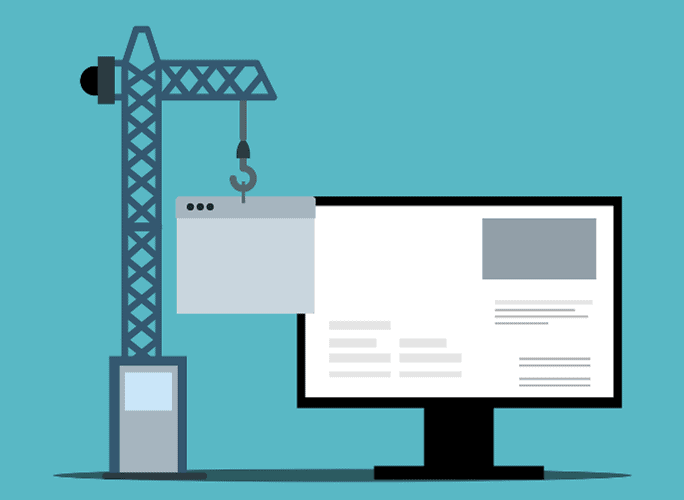
Some are easy fixes, others take more time:
- Sending traffic to a home page. These are built for exploration. They dilute focus and aren’t for converting.
- Overloading with information. Too much content overwhelms users. Landing pages need to be concise and purposeful.
- Weak or Hidden CTAs. If users don’t know what to do next, they’ll just leave.
- Slow load times. Every additional second (or millisecond!) costs conversions.
- Misaligned messaging. If the ad says one thing and the page shows another, trust collapses.
Should you include social media links?
Generally, no. Landing pages should reduce exits, not encourage them. Every outbound link creates “leakage.” If your goal is to convert, remove distractions.
Can you include multiple links?
Limit these. The more choices you give to visitors, the less likely they are to act. They need clarity.
Matching the Landing Page to the State of Intent
Not every click comes with the same intent. It depends on where the user is in the sales funnel. Some are researching. Others are comparing what’s out there. A few are ready to buy.
It’s a common mistake to send all of the traffic to the same type of landing page. Here’s the difference:
- If someone searches “what is PPC?” then they need education.
- If someone searches “PPC agency near me,” they need reassurance and proof.
- If someone searches “Book PPC consultation,” they need speed and simplicity.
Whatever the user’s level of intent, their landing page experience needs to match.
What high-intent pages need
High-intent pages should:
- Reduce copy length.
- Remove friction.
- Surface pricing clarity or next steps quickly.
- Make the CTA dominant.
What lower-intent pages need
Lower-intent pages should:
- Build authority.
- Provide context.
- Address objections.
- Include supporting content (important before you ask for commitment).
All of this improves your lead quality as well as your conversion rate. You’ll find you end up shortening sales cycles, reducing wasted enquiries, increasing close rates and improving return on ad spend.
In other words, landing page experience is about strategically aligning keywords, mindset and page structure.
The Real Cost of a Poor Landing Page
People often focus on ad spend when the biggest risk is inefficiency. A weak landing page means higher CPC, lower Quality Score, reduced conversion rate and wasted budget. Improving landing page experience is more impactful than simply increasing your budget.
Your Practical Checklist
Before you launch a Google Ads campaign, ask yourself the following questions:
- Does your headline match your ad copy?
- Does the landing page have one clear objective?
- Is the page quick to load?
- Is it mobile-optimised?
- Can you see the CTA prominently without too much scrolling?
- Are there visible trust signals?
- Is it free from distractions?
If you’ve answered no to any of the above, fix it before scaling traffic.
Expert Support Is There to Help
Building landing pages that convert is a specialist task. You need a clear understanding of user psychology, technical optimisation, copywriting, data analysis and PPC strategy.
If you’re unsure about any aspects of your landing pages and want to know if elements are helping or hindering your campaigns, our PPC Services can help you review them.
Final Thoughts
Google Ads landing page experience is central to campaign performance and not a secondary consideration. When your landing page is well-optimised, you’ll notice improvement in Quality Score, ad placement, cost efficiency and conversion rate.
A good landing page strengthens the entire user journey from search query to action. It’s worth remembering that in competitive markets, the advertisers who win aren’t always the ones who bid the most. Instead, they’re the ones who give users the best experience. Contact us to help us improve your landing pages.