When we hear talk of paid social, two names dominate. Facebook and TikTok. Huge reach. Detailed targeting. Serious conversion potential. Both offer it all—but they’re not created equal. And if you’re spending money on ads, you need to know which one’s more likely to deliver the results that you want.
The choice isn’t just about cost. It’s about audience fit, content style, platform behaviour and how people actually interact with ads on each channel. TikTok? It’s fast, trend-driven and skews younger. Facebook? Think more mature, data-rich and better for structured campaigns. So which one should you prioritise?
This article will break down what’s good (and not so good) about both platforms. And we’ll base it on real performance, not just assumptions. We’ll look at audience targeting, ad formats, creative strategy, cost differences and ROI. You’ll learn how to align your ad spend with the channel that suits your brand best.
Want help getting it right from the start? Look at our PPC services for expert campaign setup, testing and optimisation across platforms.
Platform Overview: TikTok Ads vs Facebook Ads
TikTok and Facebook may both be social platforms, but they serve very different purposes. And audiences.
Facebook, which also includes Instagram via Meta Ads Manager, has been a paid social staple for over a decade. It’s used by a wide age range, especially users aged 25-54. This makes it strong for B2C and even some B2B brands.
TikTok is newer. And more culture-driven. Its core user base is the under-35s. It thrives on trends, sound and visual storytelling.
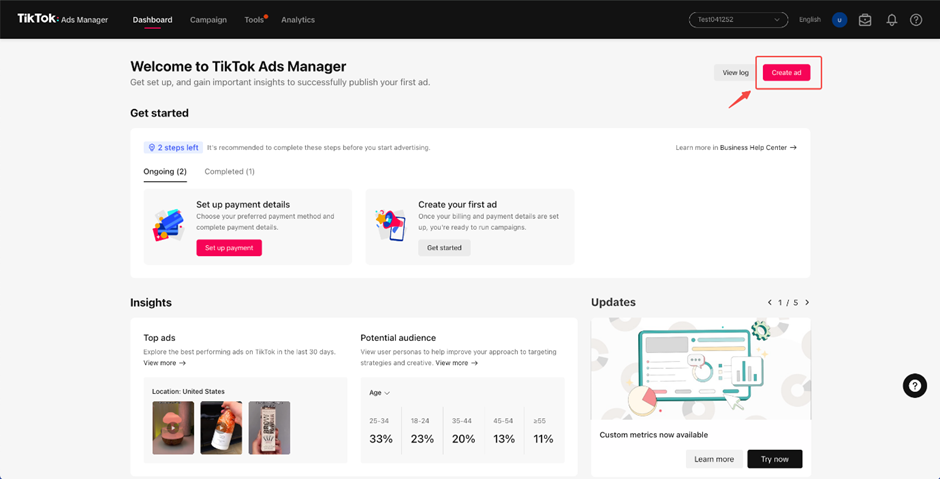
In terms of ad formats, Facebook offers more variety. You’ve got feed ads, Stories, Reels, carousel units and even Messenger placements. TikTok is simpler. But it’s more immersive. Ads appear as full-screen vertical videos within the user’s “For You” page (FYP). You’re not just interrupting content here. You are the content.
This brings us to a fundamental difference in how users behave on each platform. TikTok is discover-first. People open the app to be entertained. They stumble across products on the way. Facebook and Instagram are more intent-led. They rely heavily on audience data, interests and retargeting. It’s great for users who already have some awareness or intent.
Marketers needed to understand these platform dynamics. The best results? They come when you align with how users are naturally engaging on each app.
Who Are You Trying to Reach?

Can’t decide? Don’t start with “which is more popular?” You should start with “Who am I trying to reach?” Because platform performance depends entirely on audience relevance. The better you know your ideal customer, the better your results.
TikTok’s audience skews younger. Think Gen Z and younger millennials. They’re fast-scrolling, Trend-driven. Have little patience for traditional ads. If your product is visual, quirky or entertainment-led, TikTok could be a strong fit. But it’s not just about age. It’s about mindset. Users aren’t searching. They’re discovering.
Facebook (and by extension, Instagram) reaches a much broader age range. There’s stronger segmentation. By age. Interests. Behaviours. And even life stage. Whether you’re selling baby gear, financial services or home renovations, chances are your buyer is active here. Instagram adds more visual appeal. Facebook’s Groups and Marketplace can support niche targeting.
There’s also the B2B vs B2C angle. TikTok can work for B2C impulse buys or lifestyle products. Facebook is still more suited to considered purchases, service-based businesses, and retargeting leads who’ve already shown interest.
And don’t forget behaviour and purchase intent. TikTok users browse for fun. Facebook users often act with purpose. That changes how they respond to ads. And how you should build them.
Need help identifying where your ideal customer actually hangs out? Book a strategy session with Key Principles. We’ll help you match your audience to the right channel.
What Works Where?
TikTok and Facebook couldn’t be more different for ad creative. What works brilliantly on one, potentially falls completely flat on the other. So before you repurpose the same content across both platforms, it’s worth understanding the creative expectations for each.
TikTok is all about authenticity and speed. Ads blend into the feed. They look like native content. Think user-generated style (UGC), shaky iPhone videos, trending audios, fast edits. Lo-fi vertical videos with trending sounds. Brands that win here don’t over-produce. If it feels too polished or “salesy,” users will scroll straight past. For example, Fenty Beauty has seen success with unpolished get-ready-with-me (GRWM) videos using trending audio and creators showing products in real-time. Similarly, Duolingo’s TikTok ads lean into humour, memes and behind-the-scenes content. With the brand’s owl mascot becoming a cult personality.
The best TikTok ads? They don’t feel like ads. They’re short and energetic. And they follow current trends. A skincare brand might show a quick before-and-after with a trending sound. A meal prep service might do a ‘day in the life’ with a relatable voiceover.
Facebook and Instagram (which share the same ad manager) are more forgiving of traditional formats. You can run carousels, static images, longer videos and Stories-style placements. There’s more room for written storytelling, testimonials or problem-solution hooks. A SaaS brand might use a lead magnet carousel. A high-ticket coach might run a video ad with a longer caption explaining the offer. So what suits who?
- TikTok: Agile teams. Creative-first brands. Lower production budgets. B2C offers.
- Facebook: More structured marketing. Funnel-driven brands. B2B or higher-ticket services.
Cost and ROI Compared

Costs can be misleading when comparing TikTok ads vs Facebook ads if you’re only looking at CPMs (cost per thousand impressions) or CPCs (cost per click). What matters more is ROI. Because cheaper doesn’t always mean better value.
TikTok Ads typically offer lower CPMs. Averages hover around the £0.80 to £1.50 mark. CPCs for TikTok are around £0.50 to £1.20 on average. These figures make it attractive for brand awareness campaigns. It’s not always a conversion machine, though. TikTok’s younger audience often scrolls quickly. And not every product suits the impulse-heavy and trend-driven.
Facebook (and Instagram) usually have a higher price tag. CPMs are between £1.50 and £3.50, CPCs from £0.80 to £2.00. CPAs (cost per acquisition) can climb higher, depending on the industry. The Facebook Ad algorithm is sophisticated. As is its tracking infrastructure. Especially for lead gen and ecommerce. If you’re objective is driving high-intent actions, Facebook often delivers more qualified traffic.
Another factor? Ad account maturity. Facebook does better when accounts have good historical data. TikTok is still newer. And it can mean more trial-and-error is needed to hit the right audience. The learning curve there is steeper. Particularly for brands new to short-form video or without fast creative testing cycles.
So, which platform wins for ROI?
- TikTok. Best for building brand awareness at scale. And with a modest budget. It can also adapt your creative quickly.
- Facebook. Better suited to performance-driven campaigns. Ones where tracking, targeting and conversions are your main KPI.
In the end, value itself depends on your objectives and how they meet the platform’s strengths.
Let’s be industry-specific
Ad costs and ROI vary massively depending on your industry. So a blanket recommendation won’t cut it.
For ecommerce, Facebook is the more reliable choice for conversion-driven campaigns. Fashion, fitness, homeware—they often see stronger ROAS on Facebook/Instagram due to good remarketing options, lookalike audiences and purchase-optimised objectives. A boutique fitness apparel brand, for example, may see £4 to £6 return per £1 spent on Facebook but struggle to convert TikTok impressions into buyers.
TikTok excels for low-cost, impulse-driven products. Especially among Gen Z. Beauty, novelty gifts, budget-friendly tech gadgets. They thrive here. One viral campaign can generate huge exposure. And at low cost. But for high-ticket or B2B products, TikTok’s lower purchase intent can limit performance.
Local services or lead gen are better at Facebook. The geo-targeting and form integrations work well. Estate agents, financial advisors and trades see better lead quality here.
In education or events, TikTok’s reach at native storytelling format drives interest. But you will need to supplement it with retargeting elsewhere to close the loop.
In summary:
- TikTok. For top-of-funnel awareness. Especially in consumer-facing industries.
- Facebook. For mid-to-bottom-funnel activity. Where intent and tracking matter more.
Ad Tools and Optimisation Features
Facebook’s ad infrastructure is a huge strength. The Ads Manager has refined tools. Great for targeting, budgeting and performance tracking. Full-funnel optimisation is possible. There’s lookalike audiences and split testing. Custom audiences, retargeting and deep integration with CRMs too. It’s an ideal setup for data-led performance marketing.
TikTok Ads Manager still has limitations. Though it is improving. You can target by interests, behaviours and demographics. But these are broader. And less granular. Retargeting is there but it lacks the same precision. Split testing and audience layering are still coming around.
Pixel tracking is another difference. Facebook’s Meta Pixel is well-established. It integrates with most major platforms. Shopify, WooCommerce, HubSpot, for example. TikTok’s Pixel has come far. But still needs manual tuning for accurate event tracking.
Data privacy matters too. Facebook’s is top. It has event matching and supports Conversions API so it allows server-side tracking . TikTok is catching up. But privacy changes can affect campaign performance. Especially for smaller budgets without enough signal data.
Relying on heavy optimisation and remarketing? Facebook is the go-to. But TikTok isn’t far behind. And it may suit brands with faster creative cycles or simpler funnels.
Here’s a side-by-side comparison:
| Feature | Facebook/Instagram (Meta) | TikTok |
| Ad Manager Tool | Advanced: Facebook Ads Manager. | Improving: TikTok Ads Manager. |
| Audience Targeting | Highly granular. Interests, behaviours, lookalikes, CRM-based. | Broader interest categories, less refined. |
| Retargeting options | Robust. Customisable | Limited but developing. |
| Creative formats | Image, video, carousel, stories, reels. | Full-screen short-form video only. |
| Pixel Tracking | Mature. Supports server-side (CAPI). | Decent, still maturing. |
| Data integrations | Strong. Shopify, HubSpot, Zapier, etc. | Moderate. Shopify and a few key platforms. |
| Optimisation features | Split testing, campaign budget, optimisation, rules | Basic split testing, fewer automation options. |
| Ad Learning Curve | High (but powerful for pros). | Medium (faster setup but less control). |
| Best use case | Conversion-driven campaigns, remarketing. | Awareness. Viral reach. Top-of-funnel engagement. |
Pros and Cons
Both platforms have their strengths. But they’re not interchangeable. Your budget, audience, and creative style will often dictate which one suits your business goals. Here’s how they stack up:
TikTok Ads:

- Pro: Cheaper CPMs, fast reach, viral potential
TikTok’s algorithm prioritises discoverability. Ads can go viral quickly. With relatively low spend too. Best for brand awareness and top-of-funnel campaigns.
- Pro: Best for UGC and visual storytelling
TikTok thrives on native-looking content. Brands that use lo-fi, user-generated content often outperform polished, corporate videos. This makes it accessible for smaller teams. Or those with a strong visual brand.
- Con: Limited targeting depth
TikTok Ads Manager is improving. But its targeting still lacks the precision we see with Meta’s. Interest categories are broader. Retargeting capabilities are limited.
- Con: Younger users may not have strong purchase intent
TikTok is for younger audiences. Users often engage for their entertainment. They’re not there for shopping or services. This can affect conversion rates. Especially for high-ticket or B2B products.
Facebook Ads:

- Pro: Advanced targeting and retargeting
Audience segmentation is detailed. There’s also lookalike modelling and behaviour-based targeting. Facebook is one of the most powerful ad campaigns for performance marketers.
- Pro: Proven conversion power for ecommerce + lead gen
Years of optimisation tools and conversion-focused features means it’s effective for campaigns with measurable ROI goals.
- Con: Higher ad fatigue, higher competition
Everyone uses Facebook Ads! Competition is high. Audiences are saturated. Creative needs frequent refreshing.
- Con: Privacy changes impacting tracking
New privacy rules mean tracking isn’t all that reliable. Especially for smaller businesses without server-side integrations.
Which One?
There isn’t a one-size-fits-all answer. Choosing between TikTok Ads and Facebook Ads comes down to your goals, your audience—and how you like to create.
Go with TikTok if:
- You’re targeting Gen Z or younger Millennials.
- Your product or service lends itself to visual, fast-moving content.
- You’ve got (or can create) UGC-style videos that feel native to the platform.
- You’re aiming for reach, awareness or virality. And at a lower cost per impression.
Go with Facebook if:
- You need tight audience control. Or have multiple buyer segments.
- You’re running lead gen, ecommerce or retargeting-focused campaigns.
- You want a platform with mature optimisation tools and reliable data feedback.
- You’re targeting a broader demographic across both Facebook and Instagram.
Still unsure?
Most brands benefit from a multi-channel approach. Testing both platforms can reveal surprising insights. If you want help deciding where to spend and how to get the most from each, contact Key Principles. We’ll audit your current ads, define your audience clearly and map out which platform delivers the best return for your goals.