Google Ads is the best PPC platform in terms of reach and exposure for your brand. It’s generally the first PPC option that most businesses will try and it’s known to yield decent results if you are able to navigate it correctly. From experience, I find that despite the popularity and exposure, there is still a heap of Google Ads myths.
Some articles spread misinformation leaving clients and businesses reluctant to use the platform, but it is often Google that contribute to this too. We get it – Google Ads can be the worst thing ever – it happens to so many businesses that dive straight in with a big chunk of their marketing and very little knowledge of how it works.
I want to dispel these myths and set the story straight about Google Ads. This is because I believe, aside from its many faults, it is one of the most effective PPC platforms, and it can make a positive impact for your business. So, read on to learn about 7 common myths of Google Ads, and what the reality is!

1. Google Ads Boosts Your Organic Search Rankings on Google Search
PPC and Organic Search are two separate things and they have no bearing on the other. You know when you do a Google search and you see results at the top that say “Sponsored” in bold font? Those are PPC ads – the company has paid for those ads to be displayed there.
Beneath that, you will see standard search ads without the “Sponsored” tag. These are organic search results that a company has got via their organic SEO strategy on their website.
One does not impact the other.
Having said that, it is really useful to do both PPC and SEO as they work extremely well together, with your high volume paid advertising search terms able to inform your SEO.
2. You Can’t Effectively Calculate Profit or ROI on Your Ad Campaigns
Many people believe that Google Ads is just this big unknown – that you simply set a budget, spend money, and have no real idea of how profitable your campaigns are, or any of the important metrics. This isn’t true.
I’ve used Google Ads for years and I can safely say that it has an extensive range of metrics that you can utilise to make financial calculations with. If anything, it’s one of the main features that the platform is known for!
In your Google Ads dashboard, you have a wealth of data available relating to the ads and your budget. This data can also be easily exported in an external format so you can use it in other areas of your business.
If you are running campaigns for an e-commerce website then the ROI is simple. But for service related businesses it’s important to tally your Google Ads data with your own business metrics, you need to know your enquiry to sale conversion rate and your average order value and profit margin.
Example:
💰 You generate 10 leads per week with a Google spend of £1,000
💰 Your lead to sale conversion rate is 30% and your average order value is £500
Every week you are likely to generate 3 new sales with an order value of £1,500 from your original £1,000 budget. Don’t forget to include your profit margins in this calculation to ensure that your campaigns are always profitable and can scale.
If you can’t calculate your ROI on Google Ads, you aren’t looking in the right place!
3. Your Ads are Just Displayed to Anyone with no Targeting
One of the stranger Google Ads myths I’ve seen is that the ads you create are just randomly displayed to anyone and you have no control over this. The theory is that this then leads to poor ad performance and your ads being seen by people who would never use your business or buy your products.
Now, this can be true, BUT the only way this can happen is if you ignore all of the targeting features or don’t setup your Google Ads campaign properly – and this includes applying a lot of Google’s recommended features! Google Ads has heaps of targeting options. For example, with Google Display Network, you can use the following ad targeting options:
- Demographics
- Topic
- Location
- Keyword
- Placement
- Affinity Audiences
- Custom Audiences
That’s just one set of features. You can even go so far as creating custom audiences that Google will attempt to target based on your customer data that you upload to the platform. In short, Google Ads has fantastic targeting features that make sure you ads reach exactly the type of people you want.
4. The Ad Creation Process is Fully Automated and You Don’t Need to Monitor Anything
I know that AI an automation are hot topics right now, but the myth that Google Ads is entirely automated and you barely have to do anything just isn’t true. I’ve heard people say that you can basically create a new campaign, let Google do the rest, and then never touch it again and it will work flawlessly.
Please. Don’t. Do. This. This is not how Google Ads works and if you expect everything to be automated, and never to have to intervene, it will disappoint you.
Yes, it’s true that Google has introduced a heap of automation features and you can get help with much of the process, BUT you still have to manually do things. The more “hands-on” you are, the better results you will get.
For example, there is the option to dynamically generate your keywords and ad copy including headlines and text from your website URL. But I certainly wouldn’t recommend using these features, especially if you want to spend your budget carefully. Remember, the big machine that is Google is a profit driven business and you know the objectives of your campaign better than anyone, only you (or your chosen agency) can guide your campaigns to be as effective as possible and avoid wasting your budget by it falling directly into Google’s pocket.
Additionally, you MUST regularly review your campaigns progress and make changes. If you just create an ad campaign and never alter it, you will get diminishing returns.
5. Click Through Rate is the ONLY Metric You Need to Look at
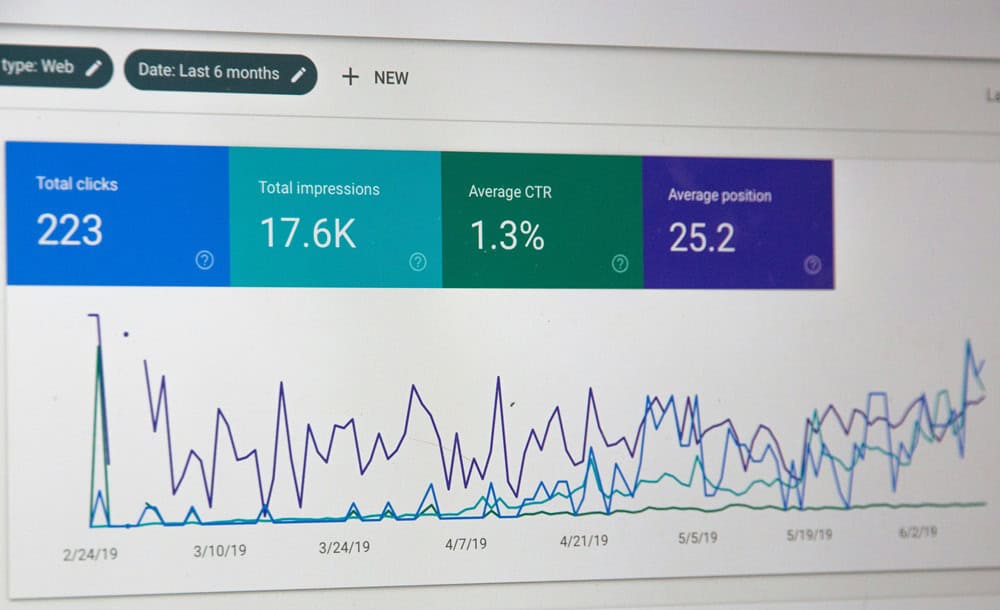
CTR (Click Through Rate) is undoubtedly important. It shows how many people are actually clicking on your ads and visiting your landing pages. However, it’s not the ONLY metric you need to look at, despite many people claiming it to be.
I wholeheartedly believe that you generally can’t look at any marketing metric in a vacuum and use it to determine the success of your strategies. For example, a 30% CTR might look fantastic, but how many of that 30% are then actually generating revenue for your business? Or how much did it cost you to get that CTR?
Yes, use CTR as a metric to measure the success of your Google Ads, BUT, also consider the following metrics:
- Impressions
- Clicks
- CPC
- Conversions
- Conversion rate
- CPA
- Conversion Value
- ROAS
- Quality Score
- The list goes on…
Things like Cost Per Acquisition or Cost Per Conversion, Return on Ad Spend, and Cost Per Click are also incredibly important and will help you build up a complete picture of your Google Ads marketing campaign and how it’s performing. You can also use these figures together with CTA to look at your marketing effectiveness and planning future marketing budgets.
But the key here is to make sure whichever metric you are monitoring, you add context to your data. Compare your data to Industry benchmarks and to your historical performance, make sure you are setting targets for these metrics that are relevant to your business.
6. The Bounce Rate is High, It’s Not Working
All too often we hear that the bounce rate is high on a landing page so it isn’t working and needs improvement.
This could be true if your campaigns are not generating any leads or sales but in most cases, landing pages for PPC campaigns are designed to keep people on that page and convert them to complete your chosen goal.
Remember you are paying for website visitors with a Google Ads campaign, so you need them to take action when on your website for it to be effective. Ideally, you don’t want the browsing visitors to come from paid advertising – this is what your SEO and Content marketing are for.
If your target audience is landing on your page, finding EXACTLY what they are looking for and getting in touch; making a call, starting a live chat, booking a demo or completing your contact form without navigating to any other page on your website then your campaign is doing what you need it to do.
So does the bounce rate really matter for Google Ads? No, not if you are generating leads and sales from your campaign.
7. Campaigns that Have Terrible Conversion Rates and Aren’t Worth the Investment
Now, there is a myth that blurs the lines and this relates to conversion rates and the worth of the platform. A common statement I see made is that Google Ads has horrendous conversion rates, and because of this, it isn’t a worthwhile marketing investment.
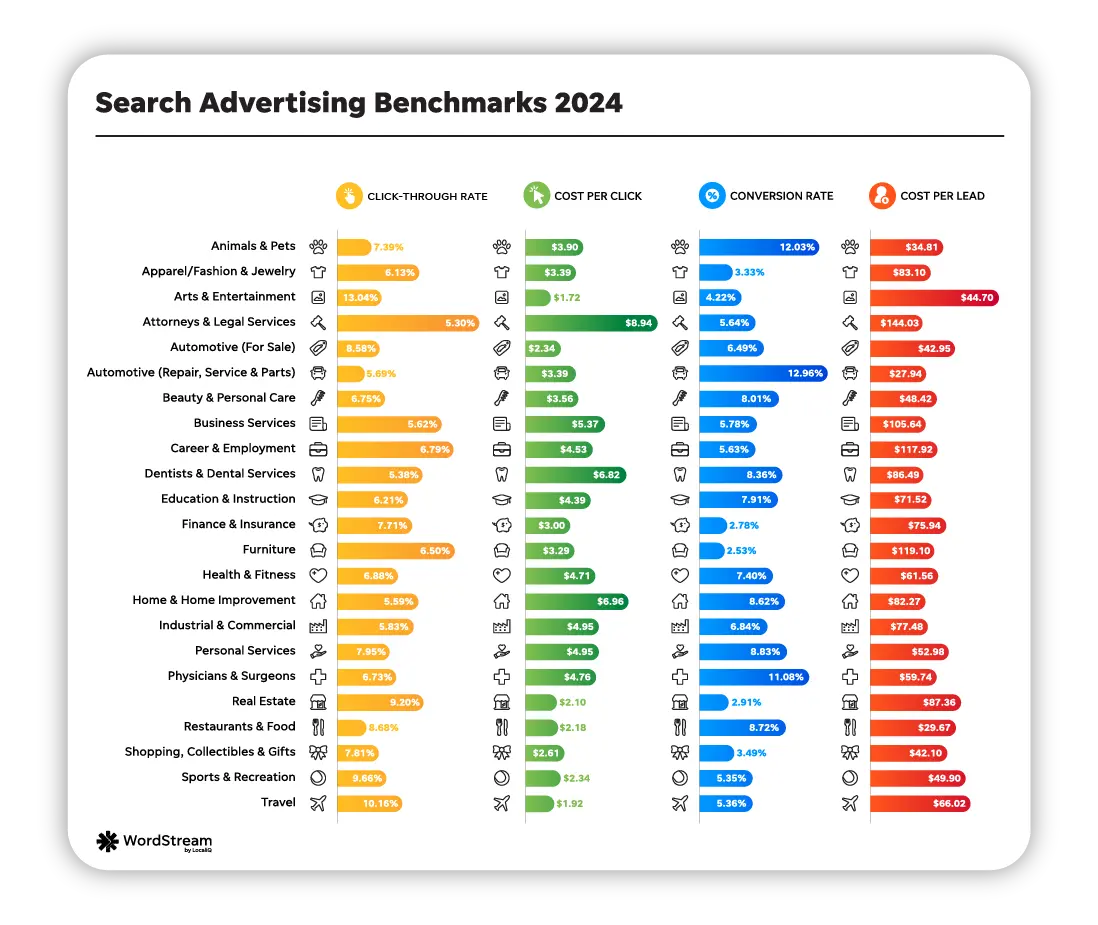
Now this is partially true. The average conversion rates for Google Ads by industry are NOT particularly overwhelming. I’ve given a sample of some of the averages for conversions for Google Search Ads below:
- Law & Legal Services: 5.64%.
- Automotive: 6.49%
- Health & Fitness: 7.40%
- Home & Home Improvement: 8.62%
- Shopping, Collectables & Gifts: 3.49%
- Sports & Recreation: 5.35%
I get it – this doesn’t exactly look impressive. However, other statistics and research shows that the average marketing conversion rates by industry are around 2.9%. Therefore, by comparison, we can see that Google Ads is actually more effective in most industries.
But that’s just the conversions. Google Ads also has the benefit of controlling your costs and having a set budget. It is easily one of the most cost-effective marketing strategies because of this and also one of the most flexible with how you can alter your bidding strategies.
What is really important is to factor these conversion rates into your planning phase and ensure that you complete some ROI based calculations so that you are aware of what your monthly budget can achieve.
Don’t be Fooled be Fooled by These Google Ads Myths – Get Started with Your PPC Today
I find the amount of misinformation relating to Google Ads staggering. As you can see from the above, various features and aspects of the platform are either unknown, misunderstood, or poorly represented.
This could be due to a lack of information, a lack of technical knowledge, or simply hearsay from other sources. I want you to ignore these myths and instead go into PPC and Google Ads with an open mind.
If you take the right approach, take the time to learn the ins and outs of the platform, and create your campaigns properly, Google Ads can be an incredibly effective part of your marketing strategy. If this is something you want to incorporate into your plan, you can reach out to us and we can book a strategy session to discuss PPC options and other channels.