As digital marketing experts, not only do we specialize in paid advertising, but we also have over 15 years of experience in delivering SEO. The tricky thing is that SEO can seem quite technical and overwhelming for beginners. The purpose of this article is to debunk the notion that SEO is super technical (as for the most part, it isn’t!).
We’ll walk you through what SEO is, whether it’s suitable for your business and the three main elements for implementing SEO as a beginner.

What is SEO?
Search Engine Optimisation (SEO) is the practice of improving the unpaid rankings of a website on search engines. The higher the ranking, the more likely people are to find the website.
Search engines like Google have created ‘crawlers’ that look through the content on websites throughout the internet. These crawlers follow the links to and from websites and analyse the content on websites to get an idea of the type of information that the website contains.
This information is then matched to a number of search terms. The better the webpage matches the intent of the user’s search, the higher it will rank in rankings.
What isn’t SEO?
SEO is not bought traffic
Such as Google Ads or Microsoft Advertising. SEO doesn’t involve pay-per-click advertising, it is purely based on the content, design and engineering of your website.
SEO is not just for Google
For example there are professionals whose job is to optimize for Bing, Amazon and YouTube.
SEO results are not fast
SEO is a long-term strategy of researching search terms to target and improving your website for a great user experience with useful content and crawlability for search engines.
Why should I do SEO?
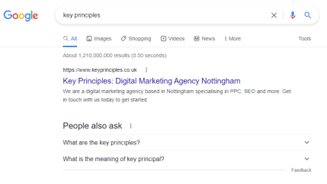
The first five results on a search engine tend to get around 70% of the search volume.
Whether you’re looking to bring in more website traffic for your own business, or working within the Marketing department of an organization, SEO offers an outstanding return on investment, as you aren’t paying for advertising space such as with Google Ads.
Some of the benefits of SEO:
- Search is usually the most common way that users find businesses
- SEO builds an asset, as you’re creating useful content on your website
- Builds credibility – If you’re on page 1, users tend to think you’re a credible source
Is SEO right for my business?

Whilst we love SEO here at Key Principles, we recognise that some websites are just unlikely to beat the competition on search engine rankings. These types of businesses would probably suit paid advertising more.
If you’re an SME with competitors that are huge corporations, operating on a global scale with massive marketing teams (think Apple, Amazon, Virgin Media) then SEO will be incredibly difficult (near impossible).
However, if you’re an SME that works relatively locally with similarly sized competitors, SEO could be a great strategy for you! (Think builders, cleaning companies, car dealerships, small-mid law firms, etc.)
Three main elements of SEO
- On-Page Relevancy
Do your pages provide an answer for people? Can search engines clearly identify the topic that you’re talking about (i.e., the product or service you offer)?
- Authority
How many other sites link to your site (backlinks)? How popular is your site? Do you have information on how people can contact you/links to any accreditations you have?
- Technical SEO
Is your site built in a way that Google can quickly understand what it’s about?
It’s pretty much that simple! Now that we know the three main elements of SEO, lets dive into what these three factors actually mean in practical terms.
How to implement the three elements of SEO
Keyword Research
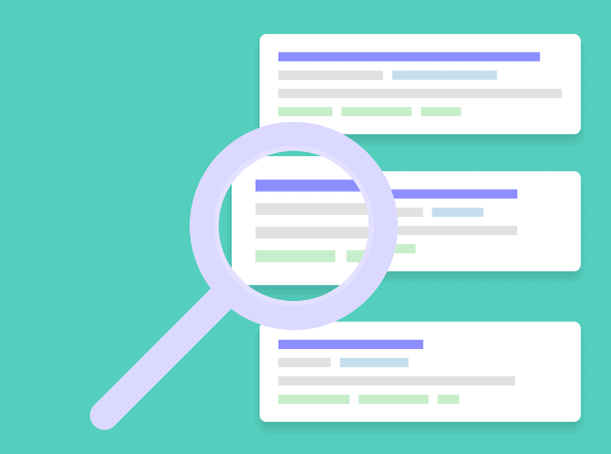
Before implementing any of these three pillars, it’s essential to undertake keyword research. After all, there’s no point in optimising your site for terms that no one is searching for!
Free tools like WordStream and KWFinder are great ways to get an idea of what people are searching for.
Once you have a list of keywords, put those keywords into Google and see the suggested searches that come up. You now not only have core keywords, but also long-tail keywords to optimise for!
Each page should target only one core keyword (e.g.: ‘Puppies’), with a range of long-tail keywords (such as ‘how to train a puppy’, ‘puppy classes near me’ etc) throughout the content on the page.
On Page Relevancy
It’s the search engine’s job to match the searcher’s intent as best as possible. It’s our job to create content that users (and search engines) want.

Search engines used to be terrible at understanding what searchers want. Those days are over and now the likes of Google, Bing and YouTube have incredibly complexed rules for deciding whether a web page is relevant to a person’s search.
On-page SEO is based around the content visible on your page and the changes that can be made within your website (without needing to be a computer programmer!)
The low hanging fruit for on-page SEO:
- Variations of your keywords throughout your content
- Titles and headings that relate to your keyword
- Main body content that talks about topics related to your keyword
- URLs that are relevant to your keyword
- Including in-text links to other pages on your website
Be sure to avoid:
- ‘Keyword stuffing’ – only place your keywords where it is completely relevant – search engines like Google can quickly pick up on this and apply a penalty on your website if you do this!
- Multiple ‘title’ and H1 (heading 1) tags – keep these to 1 each per page.
- Similar URLs throughout your site.
- Ranking a single page for several different core keywords – aim to create 1 page for 1 core keyword, with slight variations of that keyword throughout the page.
Further areas to focus on:
These are slightly more technical to implement, but they will have a significant impact on your website’s search engine optimization.
- Schema Markup
- Sitemaps
- Site Speed (check yours for free with GT Metrix)
- Mobile optimized
Improving your site speed, optimising for mobile, implementing schema markup and sitemaps will require some further research. Alternatively, by hiring an SEO professional, you can guarantee that they will be implemented with best SEO practice in mind. Contact us for a no obligation quote!
Authority
The ‘authority’ of your site mainly comes down to popularity, but there are a number of ways to increase your authority even if you don’t think your site is ‘popular’.
Link building is one of the most important aspects of SEO, as it helps search engines to understand whether your site is trustworthy.
What is my website authority at the moment?
Domain authority is worth checking out and improving over time. Go to Ahref’s free website authority checker and pop your website in for your current score. You can even compare your score with your competitors.

How do you start with link building?
First, you’ll want to consider the most trusted sites and directories that you can get your site onto. For example, if you’re a building company, getting your business set up with a link to your website on high-authority sites such as Checkatrade and Yell is the essential first step in link-building.
Do some Google searches for the keywords you would like to rank for and see what directories come up… This could be a good way of having a presence for the keyword via a directory listing.
After this, you should look for ways to get your content onto other people’s articles and websites.
Finding potential link building opportunities usually requires high quality, shareable content on your website (such as a guide or a how-to). By using tools such as Ahrefs, finding new link building opportunities is much easier. These tools can be overwhelming at first, but they offer courses and videos on how to get the most out of them!
Technical Optimisation

Search engines like Google set aside a budget that decides how long their bots can spend trying to crawl a site and gather information. As soon as this budget is used up, your site isn’t being crawled any more and they’re onto the next site. By optimising the technical side of your site, it makes it easier for search engines to quickly and effectively read your site.
Some factors included in technical optimization:
- Sitemaps & Structured Data
- Website speed
- Page redirects
- Broken pages (such as 404 & 500 errors)
- Mobile friendliness
Although technical optimisation sounds… well, technical, there’s actually a lot of quick-wins you can apply to your site without having to be a tech-genius. If you aren’t an SEO expert, try to ensure that your site is covering the following and you’ll stand a decent chance with technical optimisations:
- Images are compressed (such as using a free tool like ShortPixel)
Helping your site to run faster. - Fixing dead links
Go through your site and make sure the links actually link to a working page. - Remove duplicate content
If you have any articles or pages that have content that is similar to other pages on your site or other people’s pages, Google may flag this as duplicate content and won’t include this content in their search results, as they already have a similar piece of content to direct users to instead.
Further areas to focus on:
Again, these are slightly more technical to implement and may take more time to research, but they’ll provide a significant improvement to your technical SEO.
- Robots.txt file – This tells search engine crawlers how to crawl your site efficiently.
- Mobile friendliness – Easy to navigate and fast loading on mobile devices.
- HTTPS – Essentially making your site’s data secure and encrypted.
These elements will take a lot more research and training to implement. However, by contacting your web developer or hiring an SEO agency, you can get these important technical elements fixed relatively quickly. Contact us for a no obligation quote on implementing technical SEO!
How long does SEO take?
As SEO professionals this is one of the most common questions we get asked. We’re incredibly ROI focused so we completely understand why people ask this, but truthfully, you can’t guarantee how long SEO will take as it depends on a huge range of factors.
Some of these factors include:
- Your competitor’s SEO activity
- How many people are linking to your site
- The regularity and quality of your website content
- Updates and changes to search engines
To summarize, if any SEO agency or freelancer promises you first-page results within a certain time period, run a mile! Even if we have a pretty confident idea that a client will rank quickly, we never make promises regarding how long their SEO will take to see improvements in their rankings on the search engines.
What are the best free SEO tools?
The great thing about SEO is you can do almost all of it for free! It just takes a lot of research into the best practices and can be time-consuming to implement. Here are some of the best free SEO tools:
Conclusion
We hope you found this article useful! SEO can seem overwhelming at first, but at the core of it, it’s all about creating a website that offers the best possible user experience. Whilst there are elements to SEO that require detailed tools and training, a significant majority of SEO can be implemented by following this guide, using free tools and a bit of patience!
Want to learn more about SEO?
At Key Principles, we’re offering a free SEO Training consultation, giving you the opportunity to see if SEO training is right for you and your team if you choose to complete these activities in-house. With over 15 years of experience, we’ll ensure that you’re up to date with the latest in Google’s constantly changing search algorithm!
Request a Free SEO Training Consultation.
Don’t fancy doing SEO yourself?
With regular updates to Google’s algorithm, SEO requires constant training and re-training. Sometimes, once you factor in the costs associated with training and time implementing SEO in-house, it can work out to be much more effective to hire an SEO agency.
Not only will you have more time to focus on growing your business, but you can rest assured that professionals are taking care of your SEO efforts – benefiting from the wide range of complex paid tools we use to optimise websites, as well as years of training and expertise.
Contact Key Principles today for a Free SEO Quote for your website!
We can’t wait to see you on page 1!