I hate hunting for recipes online when all I want is to start cooking. Endless paragraphs and charming stories about the dish? Great—but they don’t tell me what ingredients I need or the steps to follow. Most readers feel the same. We want clarity, structure, and something actually useful.
What’s all this got to do with content writing and LLMs? The frustration isn’t just about recipes. It applies to all online content. Readers want clear, helpful information that’s easy to follow. And increasingly, AI tools like ChatGPT and Gemini are helping us find it.
Writing content with LLMs in mind doesn’t mean tricking algorithms or stuffing keywords. It means creating content that’s structured, understandable and genuinely useful. When your content works for people, it naturally works for LLMs too. It’s not about gaming algorithms. Clear, logically structured and information-rich content is more likely to reach the right audience. And AI’s role is to make that happen.

Number of monthly ChatGPT and Gemini mobile app downloads worldwide from May 2023 to March 2025.
Source: https://www.statista.com/statistics/1497377/global-chatgpt-vs-gemini-app-downloads/
What Is Content Writing for LLMs?
Content writing for LLMs is largely the same as content writing for SEO but with an emphasises on a conversational writing style. Writing like you’re having a conversation with another person helps AI to accurately summarise, answer questions and recommend your content.
Why does this matter now? AI tools like ChatGPT and Gemini are becoming increasingly more popular. Whilst Google Search is still the dominant player, more and more are asking ChatGPT for answers leading over 400 million monthly active users for the platform.
How is this different? Using AI instead of search pulls information from content across the web. It cites various different sources and summarises answers.
When you’re the owner of the content, if it’s not clear, structured or authoritative, it will be less likely to be included in answers. Content that LLMs can easily read will be more likely to be included, thus boosting your visibility, credibility and engagement.
There are a few key principles to LLM-friendly content:
- Comprehensive. Covering all angles will give AI and readers the full picture.
- Structured. With headings, subheadings and lists the information is easier to navigate and digest.
- Authoritative. Providing data and citing credible sources will mean your content has more authority.
- Conversational. A natural, human-like tone is easier to read.
Of the four points above, you should have been doing the first three to help with your SEO efforts anyway. The big game changer is writing in a conversational tone of voice.
The bonus? Content that’s optimised for LLMs almost always improves the human experience. Clear headings, purposeful writing and scannable information? It’s easier for us to read, digest and engage with.
Ultimately, it’s not about gimmicks and trickery. Clarity, credibility and accessibility (for both people and AI) matter.
Why It Matters for SEO and Digital Marketing
Whilst Google search still dominates, their global market share has dipped below 90% for the first time in over a decade. This is enough to show the impact AI is already having in the digital marketing space and AI usage is only likely to continue growing.
We know AI is taking a bigger role, therefore clarity and credibility in your writing matters more. LLMs won’t just match keywords. They infer meaning, intent and relationships. They want content that answers real questions, not just something that hits a keyword quota.
This is where entity-based SEO and natural language come in. It’s okay to be informal and conversational in blog posts (depending on your industry and topic of course).
Instead of obsessing over exact match keyword phrases, focus on explaining concepts, connecting ideas and giving your readers the full picture. AI interprets that content and can surface it in direct answers, summaries or recommendations.
Google AI Overviews are already doing this too. Users type in a question and instead of links, they get a synthesised answer drawn from multiple sources. If your content is clear, authoritative and structured, you’re more likely to get cited.
The benefits are huge. Content written with LLMs in mind makes your brand more visible, earns you AI citations and drives long-term organic reach. People searching for answers find your content faster and can be guided there by the very same AI tools they’re using.
The key insight? Users increasingly expect comprehensive contextual answers. Pages stuffed with keywords but lacking in clarity lose ground. LLMs are capturing more of the search experience and soon, the patterns of organic traffic could look very different. If you’re not thinking about LLMs, you’ll be missing out.
Blog Formatting for LLM-Friendly Content

I hate it when I land on a blog and it’s just one endless wall of text. It’s hard to find what I need.
The truth is, how you format your content matters just as much as what you write. Clear headings, short paragraphs, bullet points, tables and FAQs make it easier to digest. For both humans and AI.
Breaking down your insights into structured sections helps LLMs extract key takeaways quickly. Semantic keywords—naturally included—signal context and intent.
Here are the core principles you should focus on (notice: it’s a numbered list!):
- Write for humans before anything else. Don’t write for Google. Don’t write for SEO. Don’t write for LLMs even. Write for humans. LLMs are designed to mimic human comprehension. So, if it’s readable and helpful for people, AI will follow.
- Comprehensive coverage. Don’t scratch the surface (there’s a reason this article is around 2,000 words long!). Cover topics fully. Link pillar pages to subtopics so both readers and AI can find their way around your expertise.
- Semantic richness. Use synonyms, related terms and contextually relevant language to add depth and clarity. This should happen naturally when covering point 2 above.
- Conversational tone. Keep it clear, accessible and professional. It’s okay to be friendly and approachable when it fits.
- Formatting. Consider formatting techniques. Tables, bullet points, numbered lists, headings and images with alt text aren’t just for decoration. They guide the eye, help organise information, and make it easier for people and AI to understand your content’s structure and purpose.
Writing Style and Language Tips
When you’re writing content for both humans and LLMs, style matters. Not “style” in the sense of clever wordplay or lyrical sentences. But in clarity, consistency and formatting. The goal is to make your content easy to read, scan and understand. Because that’s exactly how LLMs parse it too.
Clarity over creativity
You don’t need to strip out personality. But plain and direct language almost always wins. If you’re writing about pensions, cloud software or fitness plans, readers aren’t looking for poetry, they want answers.
Take this example:
- Creative version: “The golden years of retirement shimmer like a promise on the horizon, waiting for you to step into financial freedom.”
- Clear version: “A pension is a savings plan that gives you income when you retire.”
Both sentences talk about pensions, but only one tells you what you actually need to know.
Consistency counts
Keep your tone and structure steady across posts. Switching from formal to chatty without warning is jarring for people and confusing for AI. A consistent approach gives you a brand voice that’s recognisable and makes your content easier to interpret.
Add definitions, FAQs and summaries
Think about the small “extras” that make the content scannable. A short definition box, a quick FAQ at the end of a post or a one-paragraph summary gives both humans and LLMs clear hooks. That’s the kind of thing that gets pulled into snippets and cited.
Predictable formatting helps
Headings, subheadings, bullet points and numbered steps aren’t just formatting tricks. They’re signals. To your reader, they say: this content is easy to follow. To an AI, they say: here’s how this content is structured. In this section, I’ve used H3s to break up the text for that very reason.
Quick Tip: Skim read your draft before you publish it. If you can’t pick out the key points in under 20 seconds, your reader (and an LLM) won’t either. Break it up until it’s scannable.
Linking Strategy: Internal & External

Links are signals of authority. Not an SEO box to tick. Both readers and LLMs notice links. How you connect your content can make the difference between an isolated article and one that becomes part of a larger knowledge hub.
Internal linking is where you start. Think of it as a guiding your readers through your site. If you’re written about TikTok bidding, link it naturally to your PPC services page. If you’re talking about future-proofing content, link to your strategy session or contact pages. See what I did there? This creates topical clusters that help LLMs understand your expertise. And it gives readers a clear path to take action.
External linking matters too. But the key is credibility. Citing reputable sources like Moz or reports from trusted publishers builds trust and shows you’ve done your research. LLMs weigh this when deciding which content is reliable enough to surface, summarise or cite in responses.
The bottom line? Links are still important. They’re context-builders. Internally, they knit your content together. Externally, they show you’re part of a wider conversation. Both make your content more discoverable, more trustworthy, and more likely to be surfaced by AI.
Metadata and Technical Signals
You can write the best article in the world but if the technical side of things is off, it’s like a library book on a shelf with no title or catalogue number. People (and AI) won’t know it’s there. That’s why metadata and other behind-the-scenes elements matter.
Start with the basics: titles, meta descriptions and headers. If your H1 says “How to Write Content with LLMs in Mind” and your H2s logically break down the topic, both humans and machines have a clear map to follow.
Structured data is another win. Marking up FAQs, product details or author information with schema helps LLMs pull richer, more accurate answers. It’s a quiet investment that pays off over time.
Then there’s llms.txt. This is a new standard some websites are experimenting with to guide AI crawlers. While still in its early days, being aware of tools like this means you can keep up to date with the latest ways to be discoverable.
To summarise, metadata and technical signals don’t replace good writing. But they make sure good writing gets found, understood and cited.
Common Mistakes to Avoid
Writing with LLMs in mind isn’t complicated but it’s easy to slip into habits that do you no favours:
- Overloading with keywords. Stuffing exact phrases into every sentence no longer works and it’s frustrating for readers. It also signals nothing useful to LLMs. AI cares about meaning, context and usefulness—not repetition.
- Ignoring structure and formatting. A wall of text makes your content invisible to scanners. Both human and machine. Headings, bullet points, tables, FAQs and short paragraphs guide the eye and make your key points easy to extract.
- Skipping internal linking. Without links to related pages (pillar content, services or supporting resources), your content is an island. AI and readers lose context and authority.
- Fluff over value. The classic mistake. Blog posts that have three paragraphs of background fluff before they deliver anything useful. Yes, just like those recipe blogs I mentioned that waste your time before giving you the ingredients. Clear, upfront value keeps readers engaged and LLMs happy.
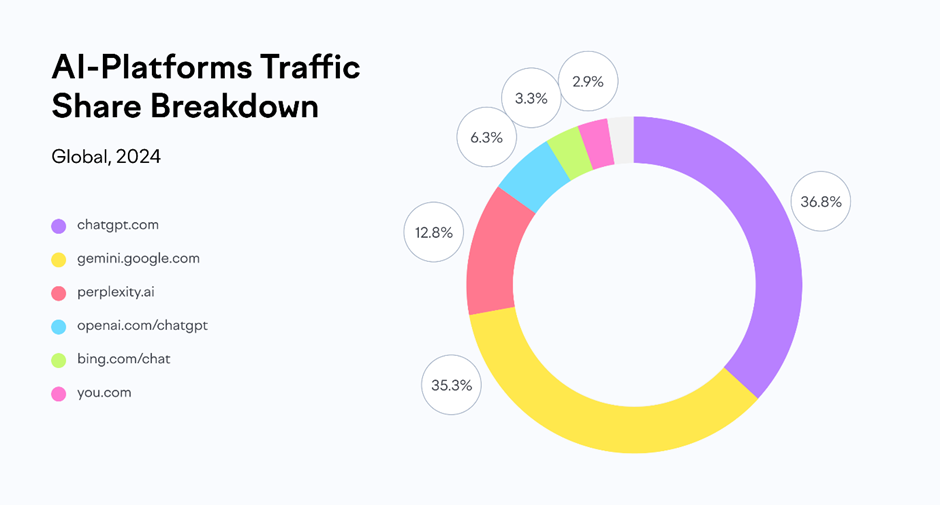
AI search data for 2024. Source: https://www.semrush.com/blog/ai-search-report/
FAQ: Content Writing with LLMs in Mind
A: It means creating content that’s clear, structured and useful for humans, which, therefore, means it’s easy for AI to understand, summarise and recommend.
A: Yes, but differently. Keywords matter as context signals not as stuffing targets. Focus on covering topics comprehensively and naturally. Use synonyms and related terms to give readers and AI the full picture.
A: Prioritise human readers first. Clear headings, short paragraphs, bullet points, summaries and reliable citations. When it’s easy for a person to read, AI can easily parse.
Final Thoughts: Make Your Content Work for Humans and AI
Writing content with LLMs in mind is the future of digital marketing. Clear, structured content gets read by people, summarised by AI and recommended across search and chat platforms.
If you’ve followed this guide, you now have the tools to:
- Organise your posts with headings lists and FAQs.
- Write clearly, consistently and conversationally when appropriate.
- Use internal and external links to signal authority.
- Optimise for both humans and AI without trickery.