As November looms ever closer, we are quickly approaching that period where businesses kick into gear, offer ridiculous discounts, and make a concerted effort to smash sales records. I’m talking about Black Friday and Cyber Monday.
These two shopping extravaganzas are often perceived from a B2C perspective, but I want to show you that they can also be incredibly effective for B2B businesses. Below, I look at the history of these events and consider a range of strategies you can use to take advantage of the Black Friday and Cyber Monday as business owners and marketers in the B2B business arena.

A Short Introduction to Black Friday & Cyber Monday
Let’s start with a short history of this marketing opportunity. It’s important to understand what the two terms mean, how they differ, and the typical dates they are held so you can adjust your marketing strategies accordingly:
- Black Friday: Black Friday originated in the States and is traditionally the first Friday after Thanksgiving. Typically, this means the date is around the 24th to 29th of November. It is the day that marks the start of the Christmas shopping season where businesses usually offer discounts and start early opening hours. Since its inception, the term has evolved and become a global phenomenon. Today, Black Friday is essentially a period where businesses offer discounts and special deals before the Christmas period.
- Cyber Monday: Cyber Monday is an offshoot that has evolved from Black Friday and started around the early 2000s. It is traditionally the first Monday after Thanksgiving in the US, which makes the date usually between the 26th of November and 2nd of December. While Black Friday originally appealed to physical retailers, Cyber Monday concentrates on eCommerce and it has been called the online equivalent to Black Friday, although in recent years, both events overlap and occupy the same marketing space.
While both these events have specific dates each year, marketing is typically targeted for a few weeks before those dates.
Historically, Black Friday and Cyber Monday are centred on B2C interactions – retailers offering crazy discounts on things like electronics, clothes, and household goods. The psychology surrounding these periods relies on FOMO (Fear Of Missing Out), and our general love for a good bargain (often whether we need the items or not!).
As the owner of a B2B business, you can also use Black Friday and Cyber Monday to your advantage – you may need to tale a different approach. You can still apply the event principles to your marketing strategies.
10 Strategies to Use for Black Friday & Cyber Monday as a B2B Business
So, you know the dates, the tradition, and what happens. How can you turn these events to your advantage and create successful B2B marketing campaigns?
Easy – you have to think about the core components of B2C Black Friday and Cyber Monday and understand how you can apply them to your B2B setting. I’ve listed 10 simple strategies that will help you do this below.
1. Plan Ahead and Act Early
It’s no good launching a new PPC campaign on the 28th of November and expecting it to yield amazing results for Black Friday. You know the exact dates Black Friday and Cyber Monday occur, so you can use this to plan ahead and get your marketing strategies in place well before the events happen.
I recommend planning your strategies and starting to sow the seeds in October or even at the end of September. As the events get nearer, ramp-up your marketing and go all out a couple of weeks before the actual dates.
By acting early and planning ahead you can build up interest for Black Friday and Cyber Monday and make sure you are not left behind by your competition. On top of this by planning ahead and starting early, you get to avoid the excessive noise and increased advertising costs associated with the event. For example, with email marketing, your brand will be more likely to grab attention if you start early and avoid everyone else’s emails, whilst Facebook Advertising costs rise around this event as well as when we head towards Christmas. Start early and reap the rewards in more exposure, lower costs and more sales. 😊
2. Consider other Strategies Aside from Blanket Discounts
The common theme surrounding Black Friday and Cyber Monday is discounting – retailers typically offer huge discounts on products so consumers can make savings. You can do this for B2B, but as you are most likely not going to shift the same volume, other pricing strategies should be your priority, such as:
- Bundling: Bundling involves packaging a range of products together and perhaps offering a slight discount when they are purchased together. This means that you don’t have to offer a huge discount on every item and can encourage the sale of multiple items/services in the process.
- Upselling: Upselling involves persuading customers to buy a more expensive version of the product/service that they initially intended to. Black Friday and Cyber Monday are great opportunities to do this. For example, you could offer extended warranties or bonuses services at a reduced price.
- Cross-selling: Cross-selling involves enticing customers to purchase related or supplementary products based on their main purchase or buying history. You could keep the main product at its standard price but offer slight discounts on these cross-selling items.
Ethically as an agency owner, I would only offer additional products or services where my client would actually benefit from the cross sell or upsell. I don’t believe in selling a service that I do not believe the client or prospect would find of benefit in helping them to grow their business. It is short sighted and, in my opinion, dishonest.
Be careful with reduced prices as this will potentially impact your profit margins unless you can improve processes and make efficiency gains to compensate for the reduced price or fee. With any discount or offer, it’s vital to make sure that the profitability is still there, and that it will be worth it for you. Always back your Black Friday and Cyber Monday decisions by sound financial cost analysis.
3. Make Use of Multiple Marketing Channels
As with any new marketing strategy, your Black Friday and Cyber Monday campaigns should be creative and make use of all the available channels you generally use. Examples include:
- Social media posts
- LinkedIn content
- Blog articles
- Guest posts
- Email marketing
- PPC marketing
- New website content
The more content you can create, the more interest and traction you can generate. This will not only boost your Black Friday and Cyber Monday marketing but have a positive impact on your content marketing strategies too.
4. Use the Events to Boost Your Industry Authority
While there should be an emphasis on increasing sales and business relations, you can use these two periods to boost your authority and voice within the industry. Consider creating social media content, blog articles, guest posts, and other informative pieces relating to Black Friday, Cyber Monday, and your industry that show you know what you’re talking about, and that you are a voice businesses can trust.
5. Create Specialised PPC Marketing
Now could be the perfect time to launch dedicated PPC campaigns for Black Friday and Cyber Monday. You could run these alongside any existing PPC marketing you have on platforms like Google Ads, LinkedIn Advertising and Facebook Advertising even.
Consider which keywords you try and rank for with your new PPC campaigns too as the competition will be higher during the Black Friday and Cyber Monday periods as I highlighted previously.
6. Create New Landing Pages Specifically for the Events
It’s important to separate your standard B2B marketing from your Black Friday and Cyber Monday marketing. Don’t simply change your existing marketing strategies and content as this could have a negative impact on your overall SEO.
Instead, create new content such as landing pages, blogs, articles, and promotional pages. This keeps everything separate and makes sure that your marketing messages and effectiveness aren’t diluted.
7. Don’t Only Target New Prospects – Market to Your Existing Clients
There is a tendency to concentrate on acquiring new customers via Black Friday and Cyber Monday marketing. However, with B2B, you should also take this opportunity to market to your existing customers, as well as lapsed customers, and remind them what you can offer.
I would recommend creating a separate marketing campaign for your existing customers. You can tailor your existing customer marketing based on what you know about each customer and their priorities, and I’d suggest making the messaging and even the offer specific to each customer. You can still use the above methods I’ve mentioned such as upselling, cross-selling, and bundling but you can be much more personalised. More on this next…
8. Personalise Your Black Friday & Cyber Monday Marketing
B2B marketing is often considered less personal but I disagree with this. You can know your customers and prospects very well and remember that you are still ultimately appealing to an individual person within a company. With that in mind, it’s important to personalise your Black Friday & Cyber Monday marketing.
Make sure your marketing isn’t generic and that you tailor things like emails and marketing messages to suit your existing clients and potential new customers.
If you have relatively few, large clients, you can tailor your marketing so specifically that email marketing becomes a case of individual emails from you to your customer with an offer tailored for their individual business priorities and needs.
You most likely have a wealth of B2B marketing data available too – use it to segment your Black Friday marketing strategies and create personalised versions for different business clusters. Specifically, you can look at sectors as well as business size to tailor marketing and offers to prospects.
9. Follow Up Afterwards and Nurture New Leads
With B2C Black Friday and Cyber Monday marketing, businesses are typically dealing with a far greater volume of customers and thus there can be a lack of follow-ups and lead nurturing afterwards. The main aim is to get a heap of sales and generate enormous revenue during that period.
For B2B marketing, this shouldn’t be the approach. Yes, you want to increase sales but retaining customers and generating long term business relationships are also key. With this in mind, make sure that you follow up any business and new leads generated from your marketing after the Black Friday and Cyber Monday periods have faded.
Consider creating a follow-up strategy including a telephone call and personalised emails to show the business that you value their interest. By doing this, you can not only capitalise on Black Friday but forge long-lasting relationships for the future.

10. Review and Assess the Effectiveness of Your Black Friday & Cyber Monday Strategies
If you want to strive for continual improvement with your B2B marketing, review and analysis is vital. Once your Black Friday and Cyber Monday campaigns have finished, it’s important to spend time gathering data to find out what worked and what didn’t.
The metrics you choose to assess will depend on your goals, but they could include:
- Return on investment
- New leads acquired
- Conversions
- Sales generated
- Website traffic increase
- Email newsletter sign-ups
- Social media followers/engagement
Compile a detailed report of important metrics and keep it on record. You can then use the data, methodology, and strategies to improve your targeted marketing campaigns for the following year with the aim of generating better results next time.
And this is important, when it works one year, it will most likely work the next year, so don’t forget to add this to your marketing plan for next year so you remember to do it and plan ahead again.
B2B Black Friday Examples
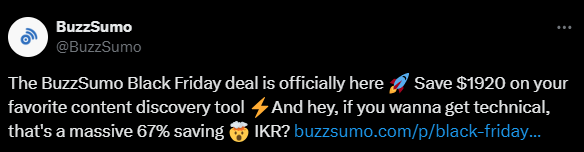
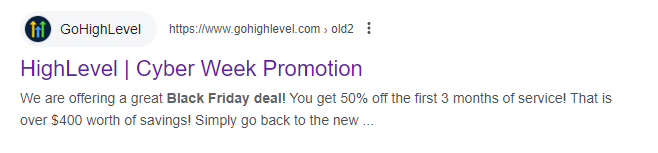
Many of the B2B software companies use Black Friday to promote their software.
Some businesses offer free shipping as shown below. Be creative but also remember to add any T&Cs.
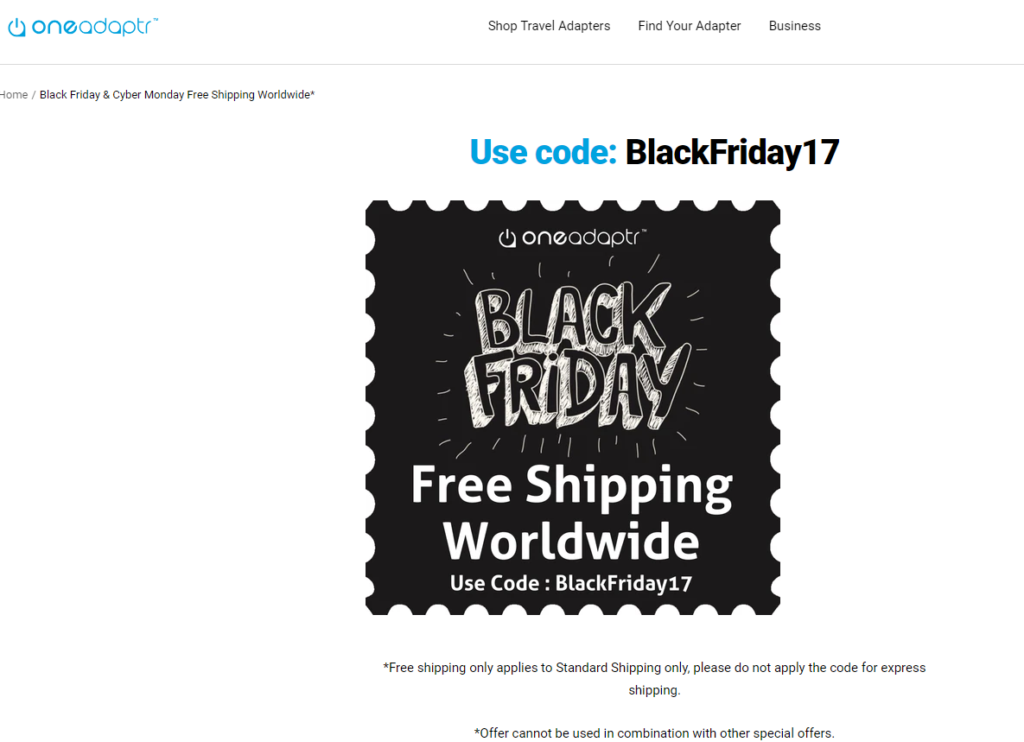
One final tip – check out other companies Black Friday offers, both B2B and B2C, to get those creative juices flowing 😉.
Capitalise on the Black Friday & Cyber Monday Tradition This Year and Increase Your Sales
I hope you have found this guide on B2B Black Friday and Cyber Monday marketing useful. Contrary to popular belief, these events are not only worthwhile for B2C businesses. Yes, there is an emphasis on consumer goods and retail, but providing you think outside the box and use a range of strategies, this can be an effective period for B2B marketing too.
I’ll look forward to seeing your Black Friday and Cyber Monday offers. In fact, if you would like some help chatting through your ideas then please get in touch with me – you can email jackie.key@keyprinciples.co.uk and we can arrange a virtual coffee (or tea) chat.