Email has been declared “dead” more times than most marketing trends. And yet, it’s still here. Not even limping along either. Data from Statista shows that email is still widely used. If you want numbers, email marketing revenue is worth 9.7bn USD worldwide. Few (if any) marketing channels can compare with this figure. The revenue hasn’t stagnated and reached a plateau either. Email continues to be a core digital marketing format. And it’s here to stay.
What has changed, though, is the volume of emails people are getting. For marketers, it means it’s harder to earn attention inside the inbox. The days of sending more emails and hoping they work are gone. Inbox saturation is real. Brands that do well from email marketing focus on three things: relevance, value and timing.
Modern email marketing looks different from the tactics some (many) teams are still using. Recent insights from HubSpot show things have changed. Marketers are getting on board with smarter AI use and deeper personalisation and focusing on first-party data. These are practical tools that can help you send fewer emails, but ones that will actually matter to the recipient.
This article isn’t a beginner’s guide; we’re assuming you already know the basics. The focus here is on what actually works in 2026 and why strategy matters so much.
Why Email Still Matters in 2026
Email still matters because it’s one of the few digital channels businesses actually own. There’s no algorithm deciding who sees your message. No sudden rule change that wipes out your reach overnight. When someone gives you their email address, you’re invited into a space that’s far more direct than social feeds or paid platforms.
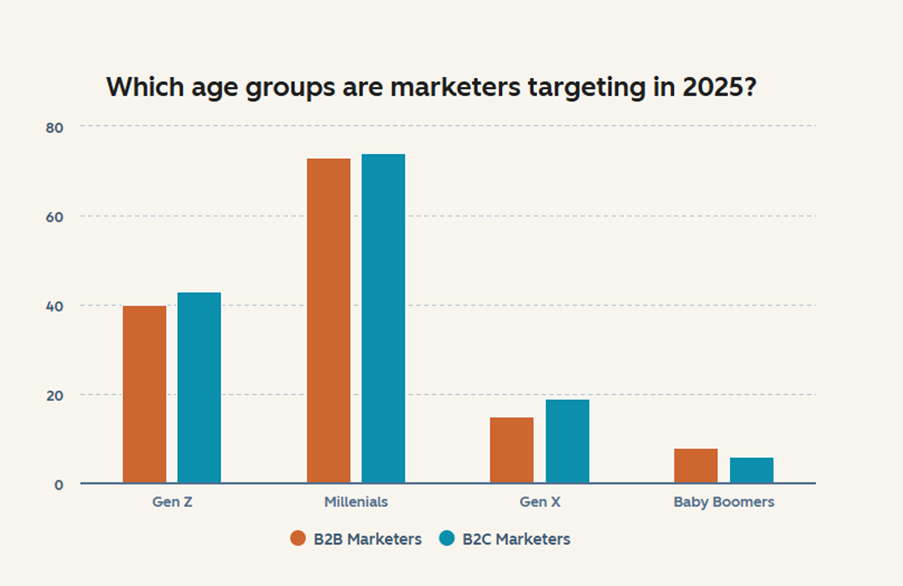
Image source: 2025 State of Marketing Report
That matters more than ever. Platforms come and go, visibility rises and falls, but email stays put. Data from Statista continues to show email operating at enormous global scale, with billions of users worldwide and steady adoption across industries. More importantly, businesses haven’t pulled away from it. They’re still investing in email because it consistently supports commercial goals, especially beyond first touch.
Email plays a quiet but critical role in retention and lifecycle marketing. It’s where onboarding happens. Where relationships are built over time. Where brands can explain, educate, reassure and re-engage. There’s no need here to shout for attention. It’s also one of the few channels that allows genuinely direct communication. It’s not just for broadcast messages.
In 2026, email isn’t about chasing growth through volume. It’s about maintaining relevance across the entire customer journey. When used properly, it remains one of the most dependable tools marketers have.
Volume to Value: Shifting Strategies
For a long time, email success was measured in simple terms. More sends meant more chances to be seen. Bigger lists meant better results. It doesn’t work like that anymore.
Batch-and-blast campaigns still happen. The truth is, though, they are far less effective these days. In many cases, they actively do more harm than good.
In their place is engagement. Not just opens, but clicks, replies, time spent reading, and what people do after the email lands. Inbox providers pay close attention to these signals. If messages are ignored often enough, future emails simply stop showing up. Volume doesn’t help here. It works against you.
HubSpot insights point to a broader change in how marketers think about email performance. Customer experience has to be at the centre of strategy. Relevance matters more than frequency:
- Don’t ask: “How often should we email?”
- Ask: “Does this email earn its place in the inbox?”
Fewer, better emails tend to perform more consistently over time. They’re expected rather than tolerated. They feel useful rather than intrusive. And they build trust instead of wearing it down.
AI’s Role in Email Marketing (and Where Human Input Still Matters)
AI is no longer the shiny new thing in email marketing. It’s already built in. For many teams, it’s quietly doing work in the background, whether they’ve labelled it as “AI” or not. Subject line suggestions. Send-time optimisation. Grouping audiences based on behaviour, not guesswork. It’s all now part of the day-to-day setup.
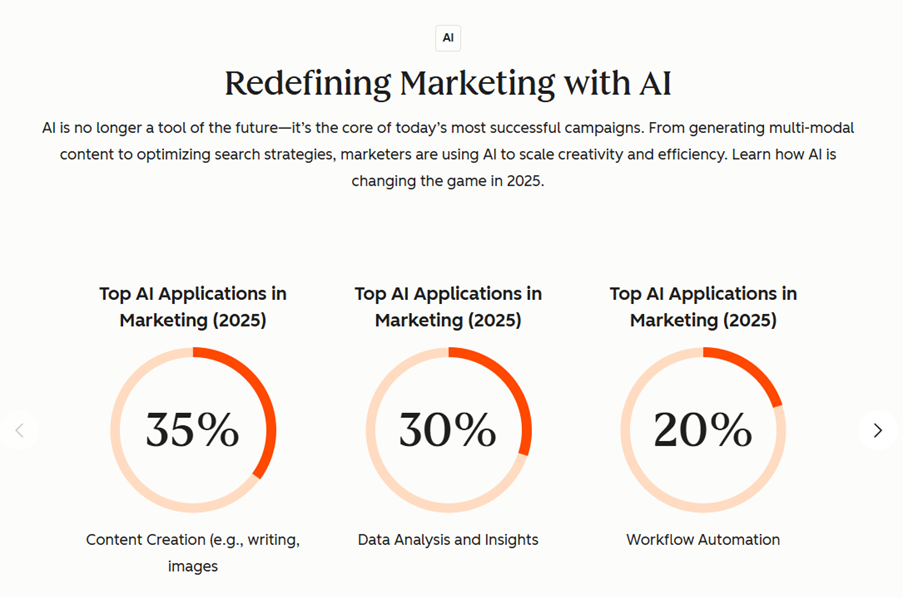
Image source: 2025 State of Marketing Report
Used well, they solve real problems. AI can test subject lines faster than a human ever could. It can spot patterns in when people are most likely to open or click. It can help predict which contacts are drifting away and which are ready to hear from you again. All of that saves time. And it removes some of the manual grind.
“Get into the mindset of embracing new tech, and don’t be afraid to move fast. Or, risk getting left behind.” – Kipp Bodnar, CMO, HubSpot
While AI is widely adopted, many teams still struggle to use it properly. They’re apprehensive -more than half feel overwhelmed by the prospect of implementing AI tools. Things can go wrong. Automation gets switched on and left alone. Personalisation becomes shallow. Messages start to sound the same.
AI doesn’t understand context, tone or brand nuance. Not in the way people do. It doesn’t know when not to send. That’s where human input still matters. Strategy, judgment and restraint can’t be automated.
The tools can handle optimisation. Humans should still decide what’s worth saying in the first place.
Personalisation Beyond First Names
Personalisation used to mean dropping someone’s first name into a subject line and calling it a day. That bar is now far too low. Most inboxes are full of emails that look personalised but feel generic the moment you open them. People notice the difference.
What works better is behavioural and interest-based personalisation. That means reacting to what someone has actually done, not what a spreadsheet says they might care about. Pages visited. Emails clicked. Products browsed. Content ignored. These signals tell you far more than job titles or age brackets ever could.
What effective personalisation looks like in 2026:
- Responding to actions, not assumptions.
- Adjusting content based on where someone is in the marketing funnel.
- Sending fewer emails, but they all feel intentional.
- Thinking about usefulness over cleverness.
What it’s not:
- Using a first name as a substitute for relevance.
- Overloading emails with data points to prove you’re tracking.
- Treating all subscribers as if they’re at the same stage.
- Automating messages and never revisiting them.
This is where lifecycle relevance really matters. You shouldn’t be sending a long-term customer the same email you send to a brand-new subscriber. The person considering a purchase wants different things (clarity/reassurance). If they’re already a customer, they want follow-up, support or a reason to stay engaged. You’ll lose attention quickly if you treat everyone the same.
Research consistently shows that personalised experiences are linked to better outcomes. Not because they feel clever, but because they feel useful. There is a line, though. Over-personalisation feels intrusive. Don’t prove how much data you have. Use just enough to be relevant and no more.
Automation That Serves the Customer Journey
Automation should make email feel more relevant, not more mechanical. When it works, it supports the customer journey in the background. The difference usually comes down to how rigid the setup is.
Lifecycle-based automation has largely replaced long, linear workflows. Instead of forcing everyone through the same sequence, smarter programmes respond to where someone actually is. Context matters.
Most problems with automation are structural. Triggers go out of date. Journeys grow on top of each other. Messages overlap. Before long, people are receiving emails that don’t quite make sense, or worse, several at once.
Here’s where things commonly fall:
| Automation that works | Automation that causes problems |
| Adjusts to lifecycle stage | Treats all subscribers the same |
| Uses clear, current triggers | Relies on outdated behaviour |
| Limits overlap between journeys | Fires multiple sequences at once |
| Is reviewed and refined regularly | Is set once and forgotten |
You don’t just flick an automation switch and walk away. As your audience changes, so should your automation. It needs checking, pruning and adjusting often. The review process is often where the biggest gains are found. A focused strategy session can be especially useful here, helping identify where automation is helping and where it’s getting in the way.
Deliverability as a Strategic Advantage
If your emails aren’t being seen, nothing else matters. This is often treated as a technical problem. Something for IT, or for later. In reality, deliverability is a strategic problem.
Inbox providers now watch behaviours:
- Opens.
- Clicks.
- Replies.
- Deletions.
- Ignored messages.
All of these signals help decide whether future emails make it into your inbox. The size of your email list is nowhere near as important as engagement quality.
Scale can work against you. Statista data shows just how crowded the global email sphere has become. An enormous volume of messages is being sent every day. Inbox providers have to be selective. Regardless of how legitimate a sender might be, it could be filtered out.
If you’re doing the basics well, strong deliverability is usually a side effect. Sending to people who actually want to hear from you. Removing inactive contacts. Not preciously clinging to list size. Making each email feel intentional.
When emails are expected and useful, people engage. When they aren’t, they’re ignored.
Design, Accessibility and the Mobile Inbox
Think about when you read emails. Most aren’t read sitting at a desk. They’re on a phone, often skimmed. Between meetings. While you’re waiting for the kettle to boil. On the train.
Mobile-first reading has changed how we should be building emails. Long blocks of text in tiny fonts with clutter don’t hold your attention, so they won’t hold your customer’s. If someone can’t work out what the email is about in a few seconds, they’ll move on.
Accessibility fits into this more than you might realise. If you design all emails to have a readable font size, a sensible structure and good contrast, you’re making it easier for everyone to read. Accessibility and usability are closely linked. Despite rarely being talked about in the same breath.
Dark mode also changes how emails appear so bear that in mind. If the colours invert, it could all fall apart. Plain text emails are worth mentioning, too. In the right context, they actually feel more personal and direct.
Tip: Don’t aim to impress, aim to remove friction. Make it easy.
Privacy, Trust and First-Party Data
In 2026, people are far more aware of how their data is used. And far less forgiving when it’s mishandled. This has changed how effective email lists are built and maintained.
It’s all about first-party data. This is reliable because it’s information people have chosen to share, usually through direct interaction. Subscribing. Clicking. Purchasing. Asking for updates. It’s automatically cleaner and more accurate. It’s also far more useful than anything pulled in from the outside.
Findings from HubSpot highlight two connected problems many teams face: rising concern around data privacy and ongoing issues with data quality. As third-party options shrink, poor data hygiene becomes harder to hide. Gaps, duplicates and outdated records directly affect performance.
Consent-led growth helps here:
- Be clear about what someone is signing up for.
- Make it easy to manage preferences.
- Respect boundaries.
Transparency builds confidence, and confidence leads to engagement.
Daily number of emails sent worldwide as of August 2025 by country (in billions)
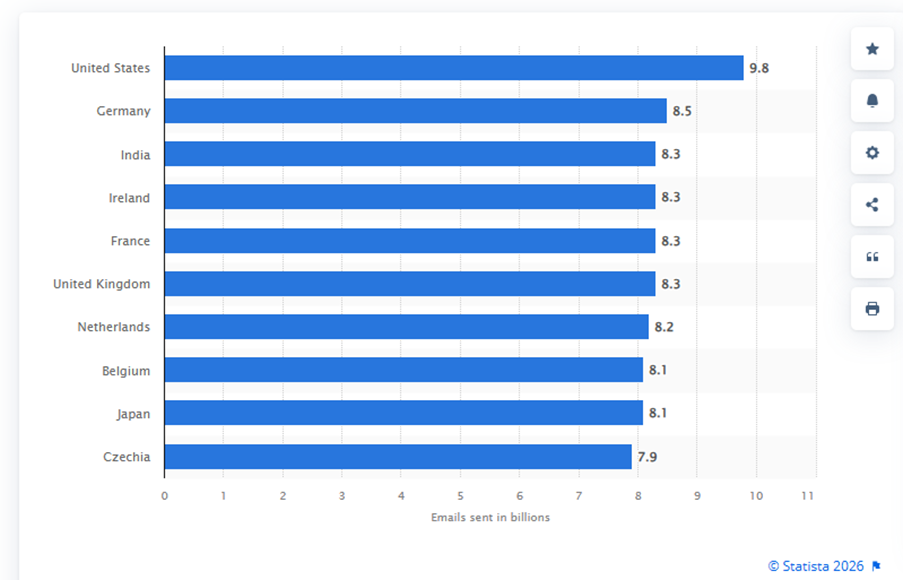
Image source: Daily number of emails sent by country 2025| Statista
Conclusion: How Email Fits Into a Wider Marketing Strategy in 2026
Email works best when it isn’t treated as a standalone channel. On its own, it can only do so much. When you use it properly, it is the thing that quietly links everything else together.
Email supports content by giving it somewhere to land:
- It gives blog posts, guides, updates and resources a direct route to the people who asked to hear from you.
- It supports sales by keeping conversations warm between touchpoints.
- It supports retention by staying present after the first conversion, when many brands go quiet.
This only works when email is aligned with wider goals. Emails need to reflect what’s happening elsewhere in the business and shouldn’t exist in isolation. Timing, tone and intent all need to match the bigger picture.
If you’re unsure how that looks in practice, or how email should connect to your broader marketing efforts, it’s worth getting in contact to see how this would look for your business.


